Greenwich royal London: what's free and what costs money
Is Greenwich's royal history free to visit?
Much of it is. Greenwich Park, the Old Royal Naval College grounds, the exterior of the Old Royal Observatory and the Greenwich Meridian line cost nothing. The Painted Hall, the Royal Observatory's telescopes and planetarium, and the Cutty Sark charge admission, usually with online pricing shown on the operator's own booking page.
Greenwich gets filed under “royal London” alongside Buckingham Palace and the Tower of London, but the money works differently here. There is no single palace gate where you buy one ticket and see everything. Greenwich splits into a free outdoor layer — the park, the river frontage, the grounds of the Old Royal Naval College — and a paid indoor layer of specific buildings and attractions that each charge separately. Get that split wrong and you either miss a free highlight you assumed was ticketed, or turn up expecting a free look inside somewhere that actually needs a booking.
What costs nothing in Greenwich
Greenwich Park is free to enter and free to walk, and it is the single best reason to come here even before you think about any building. It sits on a hill above the river, and the climb from the bottom gate up past the statue of General Wolfe to the top of the park is one of the better free views in London, looking back down over the Old Royal Naval College’s twin domes to Canary Wharf and the City beyond.
The grounds of the Old Royal Naval College are also free to walk through — the courtyards, the colonnades, the riverside path in front of the buildings. What is not free is the Painted Hall inside one of those buildings, covered below. The chapel on the opposite side of the courtyard, by contrast, is usually free to step into.
Outside the Royal Observatory, the line marking the Greenwich Meridian — zero degrees longitude, the reference point from which every time zone on earth is measured — is free to stand on and photograph. This is the bit most visitors actually came for, and it costs nothing. What costs money is going inside the Observatory buildings themselves, which is a separate matter.
The town of Greenwich around the park — the market, the pubs, the shopfronts on Greenwich Church Street — is ordinary free browsing, same as any London high street. None of the market stalls or pub visits requires a ticket, obviously, though you pay for what you eat and drink as anywhere else.
What you pay for inside the buildings
Four things in Greenwich charge admission, and they are entirely separate purchases, not one combined pass by default:
| Site | What it is | Free or paid |
|---|---|---|
| Greenwich Park | Hilltop park, river views, statue of General Wolfe | Free |
| Old Royal Naval College grounds | Courtyards, colonnades, riverside walk | Free |
| Painted Hall | Ceiling painting inside the Old Royal Naval College | Paid |
| Royal Observatory (interior) | Historic telescopes, camera obscura, planetarium | Paid |
| Cutty Sark | Preserved 19th-century tea clipper, now a museum ship | Paid |
| National Maritime Museum | Naval and exploration history collection | Free |
The Painted Hall is the ceiling James Thornhill spent nearly two decades painting inside what was originally the Royal Naval Hospital’s dining hall. It is one room, but it is a large and heavily worked one, and the ticket price reflects that it is a standalone attraction rather than part of a larger palace circuit. A guided [Painted Hall entry combined with an Old Royal Naval College tour ] gets you inside with someone explaining what you are looking at, which matters more here than at most sites because the ceiling rewards knowing what each panel depicts.
The Royal Observatory’s paid section covers the historic telescope domes, the meridian line exhibits inside the building (as opposed to the free marker outside), and the planetarium shows. The National Maritime Museum next door, confusingly, is free — it is run by the same organisation as the Observatory but has a different admission policy, which is exactly the kind of detail that trips people up when planning a Greenwich day.
The Cutty Sark sits closest to the river and is the most recognisable landmark in Greenwich from a distance, largely because it is raised on stilts above a glass visitor building rather than floating at a normal quayside. Seeing the hull and the masts from outside costs nothing. Going aboard, walking the deck and going below into the cargo holds is a separate paid ticket, and prices and current opening hours are best checked on the attraction’s own booking page rather than assumed from a previous visit.
The Meridian and the Cutty Sark: Greenwich’s two specific claims to fame
Most royal London sites are royal because a monarch lived or lives there. Greenwich’s status is a bit different: it earned its place through science and the sea as much as through royalty. The Old Royal Naval College and the wider Maritime Greenwich site are a UNESCO World Heritage listing precisely because of that combination — a former royal palace site turned into a hospital and college for sailors, next to the observatory that gave the world its time standard.
The Greenwich Meridian matters because for over a century, the rest of the planet’s time zones have been measured as an offset from the clock at Greenwich — this is where GMT, Greenwich Mean Time, gets its name. Standing with one foot in the eastern hemisphere and one in the western on the free outdoor marker is a genuinely simple, genuinely free thing to do that most first-time visitors enjoy more than they expect to.
The Cutty Sark is unrelated to the meridian in subject matter but sits a short walk down the hill from it, by the river. It was one of the fastest tea clippers of its era and is now one of the only such ships preserved anywhere in the world. A [guided walking tour of Greenwich ] typically links the ship, the college, the observatory exterior and the park into one route, which is a reasonable way to see the free layer properly and understand what each paid building actually contains before deciding which one to add.
Getting to Greenwich
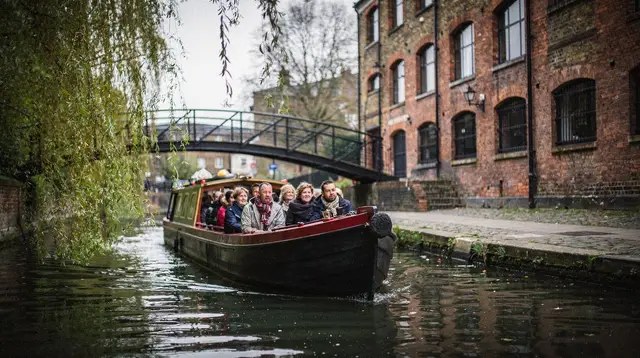
Greenwich sits east of central London, on the south side of the River Thames. The most straightforward routes are the DLR to Cutty Sark station, National Rail to Greenwich station from London Bridge or Cannon Street, or a river boat from central London piers, which is slower than the train but arrives directly at Greenwich Pier with a view of the site from the water on the way in. None of these routes require a car, and driving is not recommended given limited parking and the narrow streets around the town centre — remember that driving in the UK means keeping to the left, which catches out visitors more often on Greenwich’s tighter roads than on wider central London streets.
A standard Oyster or contactless tap covers the DLR and National Rail legs with the same automatic fare capping used across the rest of London’s transport network, so there is no need to work out the cheapest fare in advance. The river boat is usually not covered by the same capping and is priced separately by the boat operator.
Windsor: royal, but occupied
Windsor is covered in more detail on its own Windsor page, but it belongs in the same conversation as Greenwich because visitors often lump every “royal” site into one mental category, and Windsor breaks that category in an important way: it is not a preserved historical building. It is the largest and oldest occupied castle in the world, and it functions as one of the monarch’s official residences today.
That has a direct practical consequence that a guide focused only on ticket prices tends to skip: Windsor Castle can close, in whole or in part, without much public notice, for state occasions, official visits, or security reasons. A booked ticket for a specific date is not a guarantee of full access on that date. This is not a flaw in how the attraction is run — it is simply what it means for a building to still be a working royal residence rather than a museum piece. Checking the castle’s own status page close to your visit date is worth the two minutes it takes, and it is not something a third-party booking page will always reflect in real time.
Windsor’s free layer is much thinner than Greenwich’s. The town around the castle, the view of the castle walls from the street, and — on the days it runs — watching the Guard Mounting ceremony from outside the walls, cost nothing. Actually entering the castle grounds, the State Apartments, or St George’s Chapel requires a ticket, and unlike Greenwich there is no large free park equivalent inside the site itself; Windsor Great Park nearby is free but is a separate green space rather than part of the castle grounds.
Eton, the school, sits directly across the Thames from Windsor Castle and is visible from the town, but visiting the college itself is by guided tour only, with access further restricted during school term time — worth checking before planning it as a fixed stop on a Windsor day.
Greenwich versus Windsor for a royal day out
| Greenwich | Windsor | |
|---|---|---|
| Type of site | Former palace site, naval college, observatory, park | Occupied royal castle |
| Main free element | Park, college grounds, meridian marker | Town view, Guard Mounting (published days) |
| Main paid element | Painted Hall, Observatory interior, Cutty Sark | Castle grounds, State Apartments, St George’s Chapel |
| Risk of closure | Low — buildings run to published hours | Higher — can close for state occasions with little notice |
| Journey from central London | Roughly 20 to 30 minutes by DLR or rail | Around an hour by rail from Paddington or Waterloo |
Neither is objectively “better” — they answer different interests. Greenwich suits a half-day of mixed free and paid stops with a strong outdoor element and a genuine claim to scientific history. Windsor suits visitors specifically wanting to see where the monarchy actually lives and works, with the trade-off that access is less guaranteed than at a fixed museum.
Making the most of a Greenwich visit
Because so much of Greenwich is free, the paid decisions are really about which one or two indoor sites are worth adding rather than whether to buy one combined ticket for everything. A first-timer with half a day is usually better served picking the Painted Hall or the Observatory interior, not both, unless the visit stretches into a full day.
For a first visit, a [guided Greenwich walking tour ] that covers the park, the college grounds, the meridian and the market gives context to the free layer before you decide whether to add a paid stop. Visitors more interested in the social side of the town than the museums might prefer a [Greenwich walking tour built around its historic pubs ], which still passes the main landmarks but treats the town itself as the point rather than a means of getting between attractions.
For a longer day that folds Greenwich into a wider river-based itinerary, a [private Greenwich tour combined with a Thames river cruise ] connects it back to central London by boat rather than rail, which turns the transfer itself into part of the sightseeing rather than dead travel time.
Practical notes
Prices for the Painted Hall, the Royal Observatory and the Cutty Sark change periodically and are best confirmed on the specific booking page at the time of visiting rather than treated as fixed here — the ranges above are for orientation, not a quote. Payment across Greenwich, as everywhere in London, is in pounds sterling; card and contactless are accepted almost everywhere in the town and at every ticketed attraction, and there is no reason to carry euros.
The Greenwich foot tunnel under the Thames, free to walk, connects the Greenwich side to the Isle of Dogs and Canary Wharf on the north bank, and is worth knowing about if you want the classic photograph of the Old Royal Naval College’s domes from directly across the river rather than from within the park itself.
Greenwich and royal London: your questions answered
Do I need to pay to see the Greenwich Meridian line?
Standing on the meridian marker in the courtyard of the Royal Observatory is free. Going inside the Observatory buildings to see the historic telescopes, the camera obscura or the planetarium show requires a paid ticket.
Is the Cutty Sark included with a Greenwich walking tour?
Not usually. Most Greenwich walking tours cover the park, the Old Royal Naval College grounds and the town, and point out the Cutty Sark from outside. Going aboard the ship is a separate paid ticket sold by the attraction itself.
Why is Windsor Castle sometimes closed with no warning?
Windsor Castle is a working royal residence, not a museum. State occasions, official visits and security requirements can close all or part of the castle at short notice, even when a ticket has already been booked.
Is the changing of the guard free at both Greenwich and Windsor?
There is no changing of the guard ceremony at Greenwich. At Windsor, the Guard Mounting ceremony that takes place on published days is free to watch from the street outside the castle walls; only entry to the castle grounds and State Apartments is ticketed.
Can I visit Greenwich and Windsor on the same day?
It is possible but tight. Greenwich sits east of central London and Windsor sits west, and the direct cross-town journey between them takes over an hour each way before accounting for time inside either site, so most independent visitors treat them as separate half or full days.
Is the Painted Hall worth the entry fee?
Most visitors who see it in person rate it highly for the scale and detail of the ceiling painting, though it is a single room rather than a full palace interior, so it suits a targeted visit rather than a half-day itinerary on its own.
Where to go next
For the full breakdown of Windsor’s own free-versus-paid split and the castle’s opening pattern, see the Windsor Castle and Eton guide and things to do in Windsor. Compare Windsor directly against the Warner Bros. Studio Tour if deciding between the two as a single day trip west of London. For more on Greenwich specifically, things to do in Greenwich covers the wider list of activities beyond the royal sites, and the broader royal London tours guide sets Greenwich alongside Buckingham Palace and the Tower of London for visitors planning more than one royal stop.
Visitors building a river-based day should also read London’s Thames cruises and boats, since a river approach to Greenwich is one of the better ways to arrive, and day trips by train from London’s stations for how a Greenwich or Windsor day compares with the other excursions covered on this site. Those planning royal sites further west along the river can also look at Richmond and Kew’s royal connections, and for the ceremony most visitors picture when they hear “royal London,” the Buckingham Palace guard change guide explains what that specific free ceremony actually involves. A three-day royal London itinerary is a practical way to combine Greenwich, Windsor and the central palaces without doubling back across the city, and the royal London category page lists every tour and ticket type covered across the wider Greater London area.
Changing of the Guard and palace tours on GetYourGuide
Verified deep-linked GetYourGuide tours. Book through these links and we earn a small commission at no cost to you.
GetYourGuide does not provide a product photo for this activity — the image shows the meeting point, photographed by us.