Things to do in Cambridge: a day trip planning guide
What are the best things to do in Cambridge on a day trip from London?
Walk the college backs, see King's College Chapel, and go punting on the River Cam — either self-rental or with a chauffeur. Trains from King's Cross take about an hour, so a full day covers the centre comfortably without a car.
Planning a Cambridge day trip: what actually fits in one day
Cambridge is a working university town built around a river, not a single sight you tick off in twenty minutes. If you’re planning a day trip from London and searching for “things to do in Cambridge,” the honest answer is: fewer things than the internet’s lists suggest, done properly, beats rushing between eight colleges you’ll forget by dinner. This guide sets out what’s realistic in a single day, how to get there, what things cost in GBP, and where a chauffeured punt or a self-steered one makes more sense for your group.
Cambridge sits about 80 km north of London, but train time matters more than distance here. Direct services from King’s Cross run frequently and take roughly 50 minutes to just over an hour, which is why Cambridge shows up on nearly every list of day trips from London. There’s also a slower route from Liverpool Street if King’s Cross doesn’t suit your morning. Either way, no car is required, and driving into the historic centre is genuinely unhelpful — narrow one-way streets, limited parking, and colleges you can only really see on foot.
King’s College Chapel: the one interior worth paying for
If you see one building in Cambridge, make it King’s College Chapel. The fan-vaulted ceiling is one of the most photographed interiors in England, and unlike most UK cathedrals it charges a separate entry fee rather than relying on donations — expect a ticket in the range of a coffee-and-cake-plus at London prices, paid in GBP, not euros. Term-time opening is restricted around choral services and exam periods (Cambridge, like Oxford, still runs exams inside working colleges), so check the current timetable before building your day around it.
Beyond King’s, most other colleges either charge a smaller entry fee or restrict visitors entirely during certain weeks. Don’t plan to see them all. Pick one or two beyond King’s if you have time, and spend the rest of your hours outdoors along the river, where the view is free.
King’s College Chapel is one of the few Cambridge sights with genuinely step-free access to the main body of the building, which is worth knowing if mobility is a concern for anyone in your group. Away from King’s, be realistic about the rest of the centre: pavements around the older colleges are frequently cobbled, several entrances are reached by worn stone steps with no ramp, and the Backs footpath itself is flat but can turn muddy after rain. None of this rules out a visit, but it changes which colleges are worth the detour if steps or uneven surfaces are a problem, and it’s a reasonable question to put to a tour operator before booking a walking tour that promises to cover several courtyards.
Punting on the Cam: the thing everyone actually remembers
Punting is a flat-bottomed boat pushed along the river with a pole, and on the Cam it runs past the “Backs” — the rear gardens and bridges of the riverside colleges, including the Bridge of Sighs and the Mathematical Bridge. This is the activity that makes a Cambridge day trip feel different from a generic old-town walk, and it comes in two honest versions:
| Option | Who poles | Roughly suits | Booking |
|---|---|---|---|
| Self-rental punting | You | Confident groups, good weather, don’t mind getting wet | Often available on the spot, but slots run out on busy weekends |
| Chauffeured / shared punting tour | A trained punter | First-timers, families, anyone who wants to sit and look up rather than concentrate on steering | Book ahead, especially May to September |
If you want to try steering yourself, renting your own punt for an hour on the Cam is the cheaper route and the one with actual bragging rights if you don’t fall in. If you’d rather not risk your phone in the river, a chauffeured punt with someone else doing the poling covers the same stretch of the Backs without the learning curve, and it’s the better call with young kids or limited mobility in the group. Groups who’d rather split a boat than book the whole thing privately can look at a shared punting tour that groups several visitors into one boat with a guide, which usually works out cheaper per person.
Prices vary by season, boat size, and time of day — always check the current fare on the booking page rather than trusting a fixed number here.
If you genuinely only have half a day in Cambridge — say, a morning stop before an afternoon train onward, or a group with a baby who needs a proper lunch break — the honest priority order is King’s College Chapel first, then a single punt, and nothing else. Trying to add a second college or a walking tour on top of those two in under four hours usually means rushing one of them, and a rushed punt on a crowded river is a worse thirty pounds than a leisurely one. The Backs on foot is the one item worth keeping if the punt gets cut instead, since it costs nothing and takes twenty minutes.
One honest disappointment worth flagging: on a warm weekend afternoon between May and September, the river itself can feel more like a queue than a quiet punt past historic colleges, with boats nose-to-tail near the busiest bridges and self-rental punters new to the pole occasionally colliding. It’s still worth doing, but if a calm, uncrowded river is the point for you rather than the college architecture, an early-morning or early-evening slot delivers a noticeably different experience from the middle of a July Saturday.
Beyond the river: what else fills a Cambridge day
Once you’ve done King’s College and a punt, here’s what else realistically fits before the last useful train back:
- The Backs on foot. A walk along the riverside path costs nothing and gives you views of the same colleges you’d see from a punt, at a slower pace and for free — a good option if you’re tight on budget.
- Market Square and the town centre. Small, walkable, good for a quick lunch between the station and the river.
- A ghost or history walk. Cambridge has a genuinely old, dark side beneath the postcard colleges — centuries of student history, plague years, and the university’s less comfortable past. If that interests you more than another photo of a chapel ceiling, a walking tour covering Cambridge’s darker history after dark or a tour led by a Cambridge alumnus that mixes ghost stories with real university history is a different, and often more memorable, two hours than a fifth college courtyard.
Trying to fit all of this into one day is possible but tight. If you’re set on King’s College, a full punt, and a walking tour on the same afternoon, start early and skip the extra colleges — see the Cambridge things-to-do overview for how locals split multi-activity days.
Getting there, and what to buy before you go
Cambridge trains run out of King’s Cross (fastest) or Liverpool Street (slower, sometimes cheaper), and there’s no single ticket that covers both London transport and the Cambridge train — that’s a common point of confusion. If you’re weighing up Oyster card versus contactless payment for getting to the station in London, know that neither works on the Cambridge train itself; TfL’s automatic fare capping is a London-only system, and once you’re past the ticket barrier for the mainline service you’re on ordinary National Rail tickets, bought separately, in GBP.
If you’re coming from outside the UK and need a UK ETA before you travel, it’s worth remembering the ETA covers entry to the whole of the UK, not just London — a day trip to Cambridge doesn’t need anything extra beyond it, and you should only apply through the official gov.uk site, never a third-party page that charges a markup. If you’re flying in specifically for a short England trip that includes Cambridge, check transfers from Heathrow into central London first, since your onward train to Cambridge will usually start from a central London station rather than the airport.
Cambridge is a UK town like any other on this point: it uses the pound sterling, cards and contactless are accepted almost everywhere in the centre, and driving is on the left if you’ve hired a car for a wider countryside trip. None of that changes once you leave London — see money, tipping and costs across the UK for the same rules applied more broadly.
Weather and when to go
Cambridge shares London’s temperate climate — no dry or wet season in the tropical sense, average temperatures running from around 8°C in January up to roughly 23°C in July, and cloud cover that shows up even in midsummer. Punting is more pleasant, and busier, from late spring through early autumn; outside that window the river is quieter but colder, and self-rental punting in particular is a wetter, colder proposition in December than in June. Pack a layer and a light waterproof rather than betting on a clear sky either way.
Cambridge or Oxford: don’t confuse the two trips
Cambridge and Oxford are two separate university cities, each with its own set of independent colleges, and neither is a suburb or campus of the other. They also don’t fit into the same day trip — the two towns are not close to each other, and trying to combine them means you’ll rush both. If you’re deciding between the two, our dedicated Oxford versus Cambridge day trip comparison breaks down the practical differences; in short, Cambridge’s river and punting make it the stronger choice for a relaxed single day, while Oxford has more sights if you can stretch to two days or extend into the Oxford day trip guide.
For the wider region beyond Cambridge itself — Brighton, Canterbury and the rest of the south-east day-trip cluster this guide belongs to — see Kent, Sussex and Cambridge. And if train timing across several possible day trips is what’s holding up your planning, comparing day trips by train from London’s stations lays out journey times side by side so you can pick the one that fits your day, not just Cambridge’s.
Booking ahead: transfers and airport logistics
If Cambridge is one stop on a longer UK visit rather than a single day trip from a London base, it’s worth sorting your Cambridge airport transfer options early, particularly around exam season and May Week (Cambridge’s early-summer graduation and ball period) when local transport and accommodation both get tighter. Otherwise, for the ordinary day-tripper from London, the train from King’s Cross remains the simplest and cheapest way in and out — there’s rarely a reason to overcomplicate it with a car or a private transfer.
Cambridge day trip questions answered
How do I get from London to Cambridge for the day?
Take a direct train from King’s Cross or from London Liverpool Street; the King’s Cross service is faster, around 50 minutes to just over an hour depending on the train. No car is needed and driving into the centre is not worth the hassle.
Is punting on the River Cam worth it?
Yes, for most visitors it’s the single most memorable thing to do in Cambridge. Self-rental punting is cheaper but takes practice to steer; a chauffeured or shared punting tour costs more but you sit back and someone else does the poling.
Can you go inside King’s College Chapel?
Yes, King’s College Chapel is open to visitors for a ticketed entry fee, separate from general college access. Term-time hours are more restricted around services and exams, so check the current schedule before you go.
Do you need to book Cambridge tours in advance?
Punting slots and ghost walks fill up on weekends and in summer, so booking a day or two ahead is sensible. Self-rental punts are more often available on the spot, but a fixed time slot removes the risk of queuing.
Is Cambridge or Oxford better for a day trip from London?
Cambridge is the faster train journey from central London and its colleges and river are more compact to see in a single day. Oxford has more to see overall if you have two days, but for a one-day trip Cambridge is the easier logistics.
What should I skip in Cambridge if I only have one day?
Skip trying to see every college — most look similar from the outside and several restrict visitor access during exam periods. Concentrate on King’s College, the Backs, and the river instead of chasing a long list of courtyards.
Do I need an ETA to visit Cambridge from abroad?
If you’re travelling to the UK and normally need a UK ETA (Electronic Travel Authorisation), it covers the whole of the UK including day trips to Cambridge, not just London. Apply only through gov.uk/eta before you travel.
Can I use my London Oyster card in Cambridge?
No. Oyster and contactless pay-as-you-go capping only work within Transport for London’s network; Cambridge trains and local buses are a separate ticketing system and you buy tickets through National Rail or the train operator instead.
What time of day has the fewest crowds in Cambridge?
Arriving on the first train and reaching King’s College Chapel before mid-morning gets you in ahead of coach groups and school parties. Punting is quietest first thing and again in the early evening; the middle of the day, especially on a sunny weekend from May to September, is when the river and the Backs are busiest.
Is Cambridge accessible for wheelchair users or people with limited mobility?
The city centre is mostly flat, but many streets are cobbled and college entrances often involve steps, so check accessibility notes for the specific college you plan to visit. King’s College Chapel has step-free access to the main body of the chapel. Chauffeured punting is generally easier than self-rental for anyone who can’t easily get in and out of a low, unstable boat unassisted.
Trip planning guides and practical tips on GetYourGuide
Verified deep-linked GetYourGuide tours. Book through these links and we earn a small commission at no cost to you.
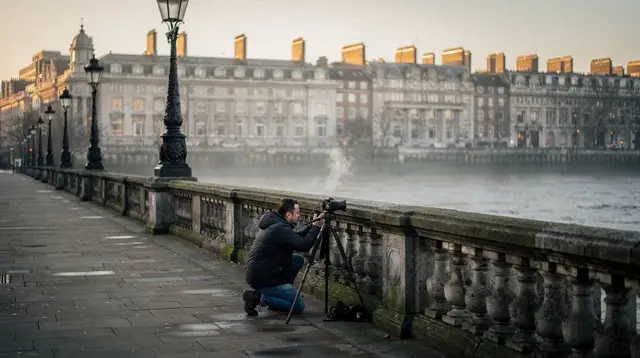
GetYourGuide does not provide a product photo for this activity — the image shows the meeting point, photographed by us.