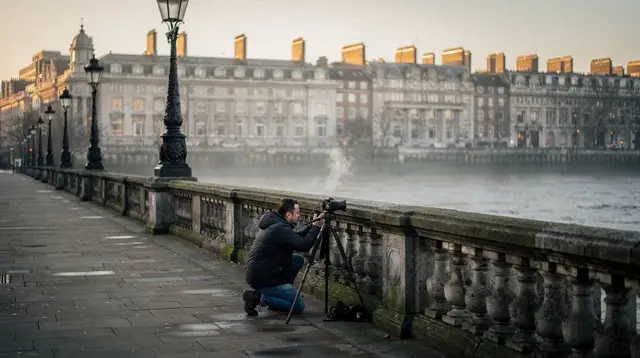
The quiet side of London: neighbourhoods to slow down in
By my third visit to London I’d stopped trying to see everything. Westminster, South Bank, the West End — I still go back, but I no longer plan a full day around them. What I actually look forward to now is an afternoon with no ticket booked, in a neighbourhood where nobody is selling anything to tourists.
This isn’t a guide to East London or Camden. Those are covered everywhere, and rightly so, but they’re not quiet anymore — Shoreditch on a Saturday is as busy as Covent Garden. The places below are quieter because most visitors never have a reason to go, which is exactly the point.
Why bother with a neighbourhood that has “nothing to see”
London rewards this kind of afternoon more than most capitals because the residential streets are genuinely varied — Georgian squares, Victorian terraces, canal towpaths, a market that serves the people who live there rather than a coach party. None of it is dramatic. You won’t come home with a photo that gets likes. What you get instead is a sense of London as a place people live in, which the big sights don’t really give you, however good they are.
I’d also say this plainly: if you only have two or three days in London, skip this and do Westminster and the Tower of London first. Slow neighbourhoods are a fourth-or-fifth-day thing, or a second-trip thing.
Barnes and the river bend
Barnes sits on a loop of the Thames in southwest London, and the loop is what keeps it quiet — there’s no through traffic, so it never became a route to anywhere else. I like walking the towpath from Barnes Bridge station past the small ponds by the village green, then stopping for coffee on the high street, which still has independent shops rather than chains. Barnes Wetland Centre is nearby if you want an actual destination, but I usually don’t bother — the walk itself is the point.
Getting there is a South Western Railway train from Waterloo (about 15 minutes), which puts it inside easy reach of central London without being in it. There’s no Tube station in Barnes itself, which is part of why it stays calm.
Dulwich and its picture gallery
Dulwich, in south London, has a village high street, a park, and Dulwich Picture Gallery — the oldest purpose-built public art gallery in England, and one most London guidebooks barely mention. It’s a paid attraction (unlike the big national museums), usually somewhere in the £10–18 range depending on the exhibition, and worth checking hours before you go since it’s smaller-scale and closes earlier than central museums.
I take the train to West Dulwich or North Dulwich from Victoria or London Bridge — roughly 15–20 minutes — and treat the whole outing as one slow loop: gallery, park, a pub lunch, back on the train. It’s an easy contrast to a morning spent queuing near Buckingham Palace.
Hampstead, above the crowds
Hampstead gets more visitors than Barnes or Dulwich, mostly for Hampstead Heath, but the village streets around it are still calm on a weekday. Steep lanes, old pubs, Keats House, and views over London from Parliament Hill that cost nothing and need no booking. The Heath itself is genuinely large — it’s easy to walk for an hour and see almost no one, which surprises people expecting inner London.
Hampstead is on the Northern line, so it’s a proper Tube journey rather than a train trip, which makes it the easiest of these three to combine with a normal day in town. I’d still keep it separate from a museum-heavy day in Kensington-Chelsea — the pace doesn’t match.
What connects these places
None of them have a single “sight” that justifies a special trip on their own merit the way the Tower of London or Windsor Castle do. That’s deliberate. What they share is a residential rhythm — shops open for locals, pubs without a tourist menu, streets where you can walk without checking a map every two minutes. If you’ve spent a few days doing things to do in London at a normal tourist pace, an afternoon like this resets things.
A practical note: none of these are day trips in the Windsor or Oxford sense — they’re inside London’s transport zones, reachable on an Oyster or contactless card with the same daily cap as everywhere else, no separate ticket to plan. That’s a big part of why they work as a half-day rather than a full expedition.
Comparing the three
| Neighbourhood | Getting there from central London | Best for | Typical time needed |
|---|---|---|---|
| Barnes | ~15 min train from Waterloo | River walks, village high street | 2–3 hours |
| Dulwich | ~15–20 min train from Victoria/London Bridge | A quiet gallery and a park | Half a day |
| Hampstead | Northern line (Tube) | Big green space, views, old pubs | Half a day |
If you’re mixing this with a more formal day of sightseeing, it pairs well with something structured earlier in the day — a morning inside Buckingham Palace with a guided visit inside the palace’s state rooms, for instance, followed by an unhurried afternoon in Barnes or Hampstead. Or if the state rooms are booked out, an audio-guided tour that still gets you inside works as the structured half of the day.
When this doesn’t make sense
If your trip is three days or fewer, or it’s your first time in London, I’d genuinely skip all three of these and read London for first-time visitors instead. Quiet neighbourhoods are something to add once you’ve already done Westminster, the South Bank and at least one national museum — not a substitute for them.
They also don’t work well on a rushed schedule. Barnes and Dulwich in particular reward having no fixed plan; if you’re clock-watching for a booked ticket later, you’ll just feel like you’re wasting time on a train.
If it’s countryside quiet you actually want rather than a residential London afternoon, that’s a different day out entirely — something like a day trip to Bath or a private tour through the Cotswolds villages gets you further from the city than any London neighbourhood can.
Quiet London neighbourhoods: your questions
Are Barnes, Dulwich and Hampstead safe to walk around?
Yes — these are established residential areas with no particular safety concerns beyond normal city sense, and in some cases (Hampstead Heath at night) the same caution you’d use in any large park after dark. See Is London safe for tourists for the general picture.
Do I need a separate ticket to get to these neighbourhoods?
No. All three are within London’s standard Tube and rail network, covered by an Oyster card or contactless payment with the usual daily fare cap — there’s no special day-trip ticket like you’d buy for Windsor or Oxford.
Is Dulwich Picture Gallery free like the British Museum?
No. Unlike the free national museums, Dulwich Picture Gallery charges admission, typically in the £10–18 range depending on the current exhibition — check the gallery’s own site for the exact price before you go.
How much time should I set aside for one of these neighbourhoods?
Two to three hours covers Barnes comfortably. Dulwich and Hampstead work better as half-day outings once you add the gallery, the Heath, or a proper pub lunch.
Can I combine one of these with a day trip further out, like Windsor or the Cotswolds?
Not really, and I wouldn’t try. A trip to Windsor or the Cotswolds already takes most of a day including travel time; stacking a London neighbourhood on top makes for a rushed day rather than a slow one.
Is Hampstead touristy now because of the Heath’s popularity?
The Heath itself gets busy on warm weekends, but the village streets around it stay far calmer than anywhere in the West End or South Bank, even at peak times.
What’s the best time of year for this kind of afternoon?
Late spring through early autumn gives you longer daylight for the Heath and the river walk in Barnes, but honestly these neighbourhoods work in any season — there’s no outdoor queue or seasonal closure to plan around the way there is at Windsor Castle.
Trip planning guides and practical tips on GetYourGuide
Verified deep-linked GetYourGuide tours. Book through these links and we earn a small commission at no cost to you.
GetYourGuide does not provide a product photo for this activity — the image shows the meeting point, photographed by us.