Bath music and film tours: real filming spots vs staged sets
Are Bath's Bridgerton and film tours filmed at the real locations?
Some are, some aren't. The Royal Crescent and the Roman Baths area appear on screen and can be visited in person. Other scenes are shot on sound stages or in locations outside Bath entirely, so a tour promising a full set recreation is walking you past a Georgian street, not a film set.
Why Bath draws a different crowd than a typical film-tour city
Most “on screen” city tours trade on a handful of blockbuster shots crammed into a single street. Bath is different because the city itself was largely built in the Georgian period as one unified architectural project, so an entire streetscape can stand in for the 1800s without any set dressing at all. That’s exactly why productions come here, and it’s also why visitors get confused about what they’re actually looking at. A tour that says “walk in Bridgerton’s footsteps” might mean a real exterior used on camera, or it might mean a street that simply looks the part and was never filmed. Both are legitimate reasons to visit Bath, but they’re not the same claim, and a guide worth paying for should tell you which is which.
This guide separates the two categories for the Bath film and music scene: locations actually used in filming, locations that only resemble them, and the live music side of the city that has nothing to do with a screen at all.
Real filming locations in Bath
The Royal Crescent
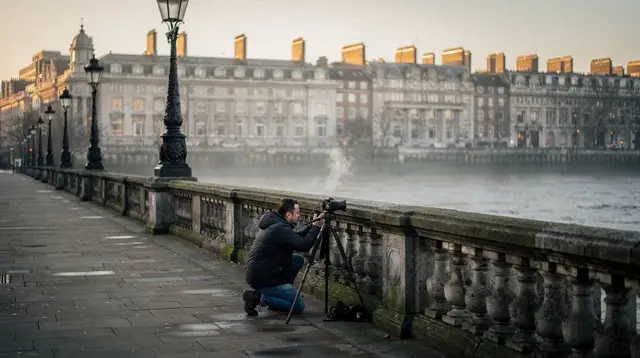
The Royal Crescent is the location most tours lead with, and for good reason: its curved Georgian facade has genuinely appeared in Bridgerton exteriors. It’s a working street with private residences behind most of those doors, plus a public lawn in front where you can take the same wide shot the production used. No.1 Royal Crescent, at one end of the terrace, is a house museum furnished in period style and open to paying visitors — useful if you want an interior sense of the era, since you won’t get inside the private homes.
The Circus
A short walk from the Crescent, the Circus is a circular arrangement of townhouses from the same architectural period. It appears in period productions less often than the Crescent, but it’s the kind of backdrop that turns up in the wider genre of costume drama filmed in Bath, and most walking tours include it on the same loop.
The Roman Baths and Bath Abbey
The Roman Baths themselves are not a Bridgerton location — they’re a genuinely ancient Roman site, not a set of any kind, and they predate the show’s fictional Regency-era setting by close to two thousand years. Tours that mention them alongside “screen locations” are usually pointing out that the same central area of the city has appeared in multiple productions across different eras of costume drama, not claiming the Baths were built for a camera. Worth knowing before you book: entry to the Roman Baths museum is ticketed separately from any walking tour, and it gets busy in summer, so book that ticket ahead if seeing the actual bathhouse (not swimming — nobody bathes here today) matters to your day.
Streets and squares used for exteriors
Beyond the two headline locations, several streets around the historic centre — narrow lanes near the Abbey, doorways along quieter side streets — have been used for brief exterior shots in various productions over the years. A guide who has actually done the research will point to a specific building and a specific scene, rather than gesturing at “this whole area is basically in the show.”
Where the “set” is not the real thing
This is the distinction most tour marketing blurs, and it’s worth being blunt about it, in the same way it’s worth being clear that Windsor Castle and the Warner Bros. Studio Tour are not interchangeable: one is a lived-in royal residence, the other is a studio full of props. In Bath, interior scenes for period dramas are almost never filmed in the actual historic rooms tourists visit. Grand interiors are typically shot at country houses elsewhere in England, or built on soundstages, because working museum interiors have lighting rigs, visitor flow, and conservation rules that don’t suit a film crew.
So when a tour description says “see where they filmed the ballroom scenes,” ask which building that refers to. If it’s a country house outside Bath, you’re not seeing it on this walk — you’re hearing about it. That’s fine as trivia, but it shouldn’t be sold as a location visit. The honest version of a Bath film tour tells you: exteriors, yes, on this street, in this spot; interiors, no, filmed elsewhere, here’s where.
A tale of two literary claims: Jane Austen and the streaming era
Bath’s connection to costume drama didn’t start with a streaming series. Jane Austen lived in the city for several years in the early 1800s, and it appears directly in her novels “Northanger Abbey” and “Persuasion.” That’s a genuine historical residency, not a filming credit, and it predates any modern production by two centuries. Tours built around Austen’s Bath (walking the streets she described, visiting sites tied to her actual life here) are a different product from a Bridgerton exteriors walk, even though marketing sometimes blends the two because they share a Regency aesthetic. If your interest is literary history rather than a specific TV series, look for a tour framed around Austen by name rather than one that only mentions her in passing while focusing on screen credits.
a bespoke Jane Austen–themed guided tour keeps that distinction intact if the literary angle is what actually brought you to Bath.
For the screen-focused side of things, a tour built specifically around confirmed exteriors is the better bet: a walking tour focused on Bridgerton’s confirmed Bath filming locations covers the Royal Crescent and the Circus with a guide who can point to the specific shots, rather than a general city walk with a costume-drama theme bolted on.
Choosing between a guided tour and a self-guided audio tour
Two practical differences matter here. A live guide can answer the “is this real?” question on the spot, adjust the route around crowds at the Crescent, and add context about the broader production (release dates, other films shot in the region) that a static script can’t update. A self-guided audio tour lets you set your own pace, pause for photos without holding up a group, and start at whatever time suits your day rather than a fixed departure slot — useful if you’re already in Bath on a day trip from London and working around a train timetable rather than a tour schedule. a self-guided audio tour of the Bridgerton filming locations is the flexible option if your schedule doesn’t line up with a fixed-departure walking tour.
If music and film aren’t the whole point of your day and you’d rather combine the Crescent walk with the city’s other Georgian sights, a general guided walking tour covers more ground:
a general guided walking tour of Bath’s historic centreComparing the screen-tour options
| Tour type | Covers real filming locations | Fixed schedule | Best for |
|---|---|---|---|
| Bridgerton sights and music tour | Yes, exteriors | Yes | First-time visitors wanting the full picture, locations plus context |
| Bridgerton filming locations walking tour | Yes, exteriors | Yes | Visitors focused specifically on confirmed shots |
| Self-guided audio tour | Yes, exteriors | No, start any time | Day-trippers on a tight train timetable |
| Jane Austen guided tour | No, literary sites instead | Usually yes | Visitors more interested in the novels than the show |
| General walking tour | Partial, in passing | Yes | Visitors wanting Georgian Bath overall, not just screen spots |
Prices for these vary by group size and season; check the current fare on the booking page rather than treating any figure here as fixed, and book Royal Crescent–focused walks a few days ahead in summer, when tour slots fill up alongside museum tickets.
Bath’s live music scene, away from the screen
Set the film angle aside and Bath has a genuine, if modest, live music scene that has nothing to do with any TV production. The Forum, a restored Art Deco cinema turned concert venue, hosts touring acts across genres. Smaller venues around Walcot Street — a stretch known locally for independent shops and studios — put on local and touring bands in rooms that hold a few hundred people at most, closer to a pub gig than an arena show. This isn’t a city that will out-draw London’s West End for music, and no honest guide should claim otherwise; it’s a worthwhile add-on for an evening if you’re already staying over, not a reason to build a day trip around by itself. Check listings for the specific week you’re visiting, since programming changes constantly and there’s no single year-round “Bath sound” the way there might be in a larger music city.
What locals actually recommend skipping
Two things come up often enough to flag directly. First, any tour or shop promising an “authentic Bridgerton ball experience” indoors, with costumes and staged scenes, is a themed entertainment product, not a location visit — fine if that’s genuinely what you want, but don’t confuse it with seeing the real Royal Crescent. Second, skip standing at the Roman Baths expecting to spot the show’s cast or crew; filming happens in scheduled blocks, not year-round, and the Baths’ primary identity is as a UNESCO World Heritage Roman site, independent of any modern production.
Practical logistics from London
Bath sits roughly 90 minutes to two hours from London by train, most commonly reached from Paddington, and it pairs naturally with a wider West Country day out. If Bridgerton and film locations are your main draw, a full day covering the Royal Crescent walk, the Roman Baths, and a stop at the Abbey is realistic without rushing. If you’d rather combine Bath with the region’s other headline site, several operators run it alongside Stonehenge as a single day trip from London — worth checking against your own pace, since fitting both properly into one day means less time at each.
sits well after a couple of hours on your feet around the Crescent and the Circus.
Getting the honest version of the experience
The short version: the Royal Crescent and the Circus are real, walkable, photographable exteriors that have appeared on screen, and you can stand exactly where the cameras stood. The grand interiors you might picture from the show were filmed elsewhere, usually at a country house or on a set, and no Bath tour puts you inside them. The Roman Baths are real, ancient, and unrelated to any modern production beyond sharing the same historic backdrop. And Bath’s live music scene is a small, genuine local circuit worth a look if you’re staying overnight, not a headline attraction to plan a trip around. Match the tour to what you actually want to see rather than to whichever description uses the most enthusiastic language, and you’ll leave with a clearer sense of the city than the marketing copy alone would give you.
If you’re weighing Bath against the other big west-of-London day trip, it’s worth reading through how Stonehenge and Bath compare before you commit a full day to one or the other, and pairing this with a look at the Roman Baths and Royal Crescent in more depth if history interests you as much as the screen connections. Travellers combining Bath with the wider region should also see Stonehenge and Salisbury and the Cotswolds villages guide for what else sits within reach of the same train line.
For a broader sense of what else Bath offers beyond music and film, the things to do in Bath overview is a good next stop, and day-trippers planning logistics from London should check day trips by train from London stations and Bath as a day trip from London for timing. Fans of the wider costume-drama and Regency theme may also want Oxford’s colleges and Blenheim Palace, another period-drama-adjacent day out west of London, and anyone drawn to filming locations more broadly should see Harry Potter locations in London and the London music and film tours guide for the equivalent in the capital itself. If ghost stories interest you alongside the history, Bath’s own guided ghost tour rounds out an evening once the daytime walking is done.
Frequently asked questions about Bath’s music and film tours
Is the Royal Crescent actually in Bridgerton?
Yes, the Royal Crescent’s facade has appeared in Bridgerton exteriors, and it’s a genuine, walkable Georgian terrace, not a reconstruction. Interior shots are filmed elsewhere, usually at country houses or studio sets.
Can I go inside the buildings used in filming?
Only where the building is normally open to the public, such as No.1 Royal Crescent (a museum) or the Roman Baths. Most residential facades on the Crescent are private homes; you view them from the street.
Do Bath’s music and film tours include the Roman Baths entry ticket?
Usually not. Most walking tours cover the exterior and the history of the site; the Roman Baths museum itself has a separate ticket and is best booked ahead, particularly in summer.
Is Bath’s live music scene worth planning an evening around?
For a short trip, no venue single-handedly justifies restructuring your day, but if you’re staying a night, the small venues around Walcot Street and the Forum host touring and local acts worth checking against the calendar before you book dinner.
How long does a Bridgerton-themed walking tour of Bath take?
Most run 90 minutes to two hours on foot, covering the Royal Crescent, the Circus, and central streets used in exteriors, at a pace that suits most fitness levels.
Is a self-guided audio tour a good alternative to a live guide?
It works well if you want to set your own pace or you’re visiting outside tour operating hours, though a live guide answers questions about which shots are real and which aren’t on the spot.
Are there other films and shows shot in Bath besides Bridgerton?
Yes. Bath and the surrounding countryside have stood in for various period productions over the decades, and Jane Austen’s own residence in the city gives it a separate, older literary claim that predates any streaming series.
Beatles, film and TV location tours on GetYourGuide
Verified deep-linked GetYourGuide tours. Book through these links and we earn a small commission at no cost to you.
GetYourGuide does not provide a product photo for this activity — the image shows the meeting point, photographed by us.