Museums and galleries in Westminster: what's free and what isn't
Are museums in Westminster free to visit?
Westminster's national museums and galleries have free entry to their permanent collections, with donations welcomed at the door. Temporary exhibitions, and separately-run sites like Westminster Abbey or the Churchill War Rooms, charge admission and are usually cheaper booked in advance.
Free national museums, paid royal sights: the distinction that matters
Westminster gets grouped with “London’s free museums” in a lot of guides, and that’s only half true. The rule that permanent collections at national museums are free to enter applies across London, including Bloomsbury’s British Museum and the museums of Kensington and Chelsea. But Westminster itself isn’t stacked with national museums the way Bloomsbury or South Kensington are. Its big draws — Westminster Abbey, Big Ben, Buckingham Palace, the Churchill War Rooms — are a mix of church, royal residence and independently run heritage site, and none of them are free.
That’s the confusion worth clearing up before you plan a day here. “Free museum” and “famous Westminster landmark” are two different categories, and treating them as the same thing is how people end up surprised at the till. This guide separates the two, tells you what genuinely costs nothing, and gives realistic prices and timings for what does.
What’s actually free in Westminster
- Big Ben and the Palace of Westminster, from outside. Walking past, photographing the tower and the Houses of Parliament from Parliament Square or Westminster Bridge costs nothing. Access inside is extremely limited and not sold as a standard tourist ticket.
- Downing Street, from the street barrier. You can see the gates and the police presence from Whitehall; there’s no entry to Number 10 for visitors.
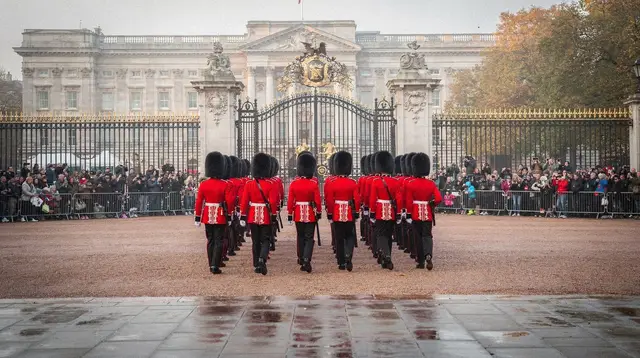
- The changing of the guard at Buckingham Palace. The ceremony itself, watched from the street or around the Victoria Memorial, is free. It runs on published days, not daily, so check the schedule before you go.
- Parliament Square and the statues around it, including the Churchill statue and the Supreme Court building’s exterior.
- St James’s Park, immediately south of the Palace, is a free green space with some of the best sightlines to Buckingham Palace.
None of this is a museum in the formal sense, but it’s most of what people picture when they think “Westminster sightseeing,” and it costs nothing beyond the trip there.
What you’ll pay for, and roughly how much
| Site | Type | Typical price range (adult) | Book ahead? |
|---|---|---|---|
| Westminster Abbey (with Jubilee Galleries) | Church + small museum | £30-£35 | Strongly recommended |
| Churchill War Rooms | Museum (Imperial War Museums) | £30-£40 | Recommended |
| Guided walking tour of Westminster sights | Guided tour | £20-£30 | Optional |
| Changing of the guard, guided/explained | Guided experience | £25-£40 | Optional |
Prices move with the season and with how far ahead you book, so treat this table as a range, not a quote — check the current figure on the operator’s page before you commit.
Westminster Abbey is the one people most often assume is a free national museum because it looks and functions like one from the outside. It isn’t: it’s a Church of England royal peculiar, funded independently of the government museum grants, and it charges to keep the building maintained. The Jubilee Galleries — a small exhibition space built into the medieval triforium, 16 metres up — are included in the standard entry ticket rather than sold separately.
a guided tour of Westminster Abbey that includes the Jubilee Galleries and a walk past Big Ben is a practical way to see the Abbey’s interior with context, rather than working through an audio guide alone.
The Churchill War Rooms sit under the Treasury building, a short walk from Parliament Square. They’re run by Imperial War Museums, which does offer free entry at its other London sites (the main IWM in Lambeth, for one), but the War Rooms are one of the exceptions that charges for entry because of the specialist underground preservation work involved. If the Second World War and Churchill’s wartime cabinet interest you, a guided deluxe tour of the Churchill War Rooms gets you through with a guide rather than working self-paced through the audio tour.
Accessibility and getting around Westminster
Westminster is one of the flattest, most walkable parts of central London, but the sights here weren’t designed with modern accessibility in mind, and it’s worth knowing that before planning a full day on foot. Westminster Abbey has stepped access at several points inside the medieval building; step-free routes exist but need to be requested in advance rather than found on arrival, and wheelchair users should contact the Abbey directly or book through an operator that flags accessible tickets. The Jubilee Galleries, reached partly by lift, are more accommodating than the Abbey’s older sections.
The Churchill War Rooms are, perversely, one of the more accessible sites in Westminster despite being underground: lifts connect all public areas, and the museum was fitted out relatively recently with step-free routes built in from the start. Parliament Square, Whitehall and St James’s Park are all level pavement, so the free half of a Westminster day — Big Ben from outside, Downing Street, the Park — needs no special planning.
The changing of the guard is the trickiest sight for anyone who can’t stand for long periods or push through a crowd: sightlines from ground level are blocked once the crowd builds, and there’s no reserved viewing area for mobility needs beyond arriving early. For a fuller picture of what’s realistic across the city, not just this district, the accessible London guide covers step-free Tube stations and venues in more detail than fits here, and the getting around London guide covers Tube and bus step-free options for reaching Westminster in the first place.
The changing of the guard: free to watch, worth paying to understand
The ceremony outside Buckingham Palace is the most photographed free event in Westminster, and also the most misunderstood in terms of timing. It doesn’t run every day of the year, and the exact schedule changes with the season — check the official schedule before building a morning around it, because a wasted trip to an empty forecourt is the single most common complaint about this sight.
Standing on the street or around the Victoria Memorial costs nothing, but sightlines get crowded fast, especially in summer. A guided option, like a guided visit covering the changing of the guard alongside Westminster Abbey, gets you positioned early and explains what’s actually happening — which regiment is on duty, why the band plays what it plays — rather than leaving you watching a formation march past with no context.
Fitting it into a day
A realistic Westminster day, on foot, in order:
- Morning: Westminster Abbey. Book an early timed slot to avoid the worst of the queue. Budget 90 minutes to two hours inside, including the Jubilee Galleries.
- Late morning: Parliament Square and Big Ben, from outside. Ten to fifteen minutes to see the tower and the Houses of Parliament, free.
- Walk to Whitehall and Downing Street. Another ten minutes, free, on the way toward Trafalgar Square or back toward the Palace.
- Early afternoon: Churchill War Rooms, if it’s on your list — budget 90 minutes to two hours underground.
- Late afternoon: Buckingham Palace and the changing of the guard, timed to the published schedule.
That’s a full day on foot within Westminster, with one paid entry (the Abbey) doing most of the heavy lifting and everything else either free or optional. If you’d rather have someone else handle the route and the queueing, a guided walking tour covering Westminster’s must-see sights compresses most of the above into a single half-day with a guide.
If you only have half a day
If a full Westminster day isn’t realistic — an early flight out, a family with young children, or another district competing for the afternoon — the choice comes down to the Abbey or the Churchill War Rooms, not both. Westminster Abbey is the better pick if you’ll only see one Westminster interior on this trip: it’s the more photogenic space, it includes the Jubilee Galleries in the same ticket, and it sits directly next to Big Ben and Parliament Square, so the walking between sights is minimal. Budget two hours door to door, and note the Abbey is closed to sightseeing visitors on Sundays, when it operates as a working church with services running most of the day.
The Churchill War Rooms win out if the history interests you more than the architecture, or if you’re travelling with anyone who finds a working church a harder sell than an underground wartime bunker. It’s also the calmer option on a crowded day: the Abbey’s morning queue is the single biggest time cost in Westminster, while the War Rooms rarely reach the same crush, and there’s no Sunday-service restriction to plan around.
Skip both, on a genuinely short visit, and you can still cover Westminster’s free layer in under an hour: Parliament Square, a look at Big Ben and the Houses of Parliament, a walk down Whitehall past Downing Street, and — if the timing lines up with the published schedule — the changing of the guard. That’s a reasonable stopgap between a morning flight and an evening one, not a Westminster visit in the fuller sense, but it costs nothing and covers the postcard shots. For how that half-day fits against the rest of a first trip, the how many days in London guide weighs Westminster against everything else competing for a short itinerary.
Westminster versus London’s other free-museum neighbourhoods
If your priority is genuinely free national museums rather than royal and government landmarks, Westminster isn’t the neighbourhood to base a day around. Bloomsbury, a short Tube ride north, has the British Museum, whose permanent collection is free — see the British Museum and free museums guide for what else nearby follows the same rule. Kensington and Chelsea clusters the V&A, the Natural History Museum and the Science Museum together, all free at the door; the museums and galleries guide to Kensington and Chelsea covers that trio.
Westminster’s strength is a different kind of sightseeing: the seat of government, the working Abbey, the monarch’s London residence. For a broader look at how the free national museums fit together across the city, see the London museums and galleries guide; for the royal-history angle specifically, the royal London tours guide and the Westminster royal London guide cover Buckingham Palace, the Abbey and Parliament as a set.
What surprises first-time visitors
A few things about Westminster catch first-time visitors off guard, and it’s worth saying them plainly rather than leaving people to discover them at the door. The first is the sheer size of the Abbey’s queue on a weekday morning in high season — arriving without a timed ticket can mean an hour or more standing outside a building most people expected to walk straight into, since it looks, from the outside, like a public monument rather than a ticketed attraction.
The second is that Big Ben’s tower isn’t something you can go inside on a normal visit. Guided access to the clock mechanism exists but is rare, restricted to UK residents applying through their MP, and unrelated to any tourist ticket sold for the Abbey, the Shard or the London Eye — a detail that disappoints visitors who assumed a paid ticket somewhere would get them to the top.
The third is the changing of the guard itself: the ceremony is shorter and further away than photographs suggest, viewed from behind railings and a crowd several rows deep, and it doesn’t happen every day. Visitors who build a whole morning around it without checking the schedule sometimes arrive to an empty forecourt.
None of this makes Westminster not worth the day — the free layer alone (Big Ben, Parliament Square, St James’s Park, Downing Street) covers most of what draws people here — but it’s worth arriving with the realistic version of each sight rather than the postcard one. The London travel mistakes to avoid guide covers more of the same pattern across the rest of the city, for anyone planning beyond Westminster.
Planning notes
- Donations at free sites are genuinely optional. Where a site does ask for a donation at the door, it’s suggested, not a hidden entry fee — no one is turned away for declining.
- Temporary exhibitions cost extra even at free national museums, though that rule affects Bloomsbury and Kensington more directly than Westminster, where the big sights aren’t run on the free-national-museum model to begin with.
- Combine paid tickets where they overlap. A ticket that bundles the Abbey with the Jubilee Galleries, or a guide that covers Big Ben and the guard change in one walk, tends to cost less than booking each separately.
- Ceremony days change. The changing of the guard schedule shifts through the year — confirm it the week you travel rather than relying on a fixed weekly pattern.
- Book the Abbey and the War Rooms ahead, especially for school holidays and weekday mornings when tour groups arrive early.
For what else is nearby and free once you’ve covered Westminster itself, the free things to do in London guide rounds up the wider picture, and things to do in Westminster lists the category’s full range of tours and tickets if you want to compare options beyond this list. If museums specifically are your focus for the trip, things to do: museums and galleries filters across every district, and the museums and culture four-day itinerary sequences Westminster against Bloomsbury and Kensington so you’re not doubling back across the city on consecutive days.
Is Westminster accessible for visitors with mobility needs?
Partly, and unevenly. The Churchill War Rooms have lifts throughout and step-free routes built into a relatively modern fit-out, so they’re straightforward for wheelchair users. Westminster Abbey is a medieval building with stepped sections; step-free access exists but needs arranging ahead of the visit rather than showing up and hoping. The outdoor free sights — Parliament Square, Whitehall, St James’s Park — are level and easy. The changing of the guard is the hardest sight to see well without standing for a stretch and holding a position in a crowd.
What’s the best time of day to visit Westminster to avoid crowds?
Before 9am or after 4pm, on a weekday outside UK school holidays, if the Abbey is your priority — the queue builds fastest between mid-morning and early afternoon, and it’s worth checking that Sundays are ruled out entirely for sightseeing since the Abbey runs services most of the day. For the changing of the guard, arrive at least 30-40 minutes before the published start time to get a sightline at all; arriving right on time usually means watching over several rows of heads rather than seeing the ceremony itself.
Museum and gallery tickets and tours on GetYourGuide
Verified deep-linked GetYourGuide tours. Book through these links and we earn a small commission at no cost to you.
GetYourGuide does not provide a product photo for this activity — the image shows the meeting point, photographed by us.