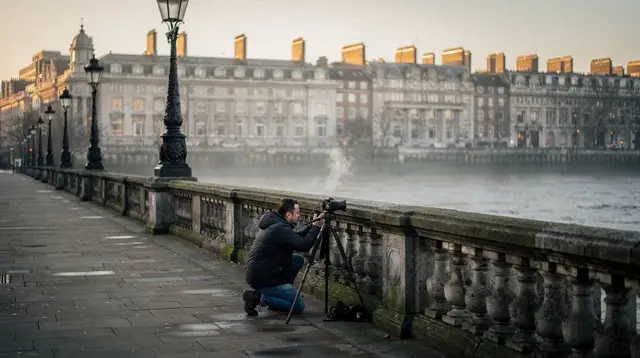
Things to do in South Bank: a planning guide
What should I actually plan for a day on South Bank?
Anchor the day around three fixed points: Tate Modern and Shakespeare's Globe (free to enter, or low-cost), Borough Market (best before midday), and the London Eye or a Thames boat if you want the river view. Pay in GBP, tap in with Oyster or contactless, and book the London Eye ahead if you want a set time slot.
Planning a day on South Bank
South Bank runs along the south side of the Thames from roughly Westminster Bridge to Tower Bridge, and it packs in more fixed-price, fixed-time attractions per kilometre than almost anywhere else in London. That is useful for planning: instead of wandering, you can build the day around a small number of things that actually need a booked slot, a specific opening time, or a specific weather condition, and let the rest fill in around them.
This guide answers the practical questions: what needs booking ahead, what is free, how long each stop actually takes, and where the real trade-offs are between the London Eye, Tate Modern and Borough Market. It assumes you already know the basics covered in getting around London and the UK ETA rules; here we stay specific to South Bank.
What South Bank actually covers
The stretch is walkable end to end in about 30 to 40 minutes without stopping, but plan for a half day to a full day if you want to go inside anything. From west to east:
- London Eye and County Hall area, near Westminster Bridge
- Southbank Centre and the National Theatre, arts venues with a busy riverside promenade
- Tate Modern, the former Bankside Power Station, now a major modern art museum
- Shakespeare’s Globe, a reconstruction of the original Elizabethan theatre
- Borough Market, just south of the river near London Bridge station
- HMS Belfast and Tower Bridge views, at the eastern end near Tower Bridge and the City
Nearest stations are Waterloo, Southwark, London Bridge and Bank (via Tower Bridge on the north side). None of them is a single “South Bank station” — check which end of the walk you are starting from before choosing a station.
South Bank is one of the easier stretches of London to cover without stairs. The riverside path itself is flat and paved the whole way from Westminster Bridge to Tower Bridge, and Tate Modern, the Southbank Centre and Borough Market are all step-free at their main entrances. The London Eye offers wheelchair-accessible pods, best booked ahead so the right pod is held for your time slot. Shakespeare’s Globe has more uneven, older flooring inside the theatre itself, so check the specific access notes for your performance if mobility is a concern. For the wider picture across the city, the accessible London guide covers step-free Tube stations and other practical detail beyond this one stretch of river.
If you only have half a day
Trying to fit the London Eye, Tate Modern, Shakespeare’s Globe, Borough Market and HMS Belfast into half a day means rushing every one of them, and rushing is where South Bank stops being worth it. If you only have a morning or an afternoon, pick two rather than all five. Tate Modern plus Borough Market pairs well because both sit within a ten-minute walk of each other and neither depends on a booked time slot, so you can adjust the split between them on the day. The London Eye pairs less easily with anything else, since a booked slot fixes your arrival time and any queueing afterwards eats into whatever else was planned around it. Skip HMS Belfast on a half-day visit unless naval history is a specific interest of yours — it is the one stop on this stretch that rewards a full, unhurried hour rather than a quick look from the outside.
The London Eye: is it worth building the day around
The London Eye is a fixed-price observation wheel ride lasting about 30 minutes, and the price is set by time slot rather than by how much you use it. It is genuinely worth it on a clear day for the view over Westminster and the river; it is a weaker use of money on a grey, low-cloud day, which in London is common even in July. Ticket prices vary by date and fast-track option, so check the current figure on your GetYourGuide or Viator listing rather than relying on a number printed months ago.
a private guide who can time the Eye, Tate Modern and Borough Market into one route is a reasonable option if you want someone else to solve the sequencing problem, since the three sit at different points along the same stretch and queueing badly at one can eat the time meant for another.
If you decide to skip the Eye, that budget converts well into a paid Tate Modern exhibition or a proper sit-down lunch at Borough Market instead — neither is a downgrade, just a different kind of afternoon.
One disappointment worth naming honestly: the queue for the London Eye’s ticket check and security screening can run 20 to 30 minutes even with a pre-booked ticket, on top of the wait for your actual pod, so the ride itself can feel short relative to the total time spent standing in line. For a longer, more opinionated take on whether the ride earns its price on a specific day, see is the London Eye worth it. If a wide view matters more to you than the wheel itself, the best views of London guide covers other vantage points across the city, some of them free.
Tate Modern: free collection, paid exhibitions
Tate Modern’s permanent collection is free to enter, consistent with the rule for national museums covered in the British Museum and free museums guide. Only special temporary exhibitions carry a ticket, and those sell out on popular shows, so book ahead if there is a specific one you want to see.
Budget at least 90 minutes for a proper look at the permanent collection, more if you want the temporary show as well. The building itself — a converted power station with a long turbine hall — is worth walking through even if contemporary art is not your main interest.
If budget is tight, South Bank is a good example of how far London’s free national museums stretch: a full morning at Tate Modern costs nothing beyond the journey there. See the free things to do in London guide for other no-cost stops elsewhere in the city, useful if you are building a longer trip around a fixed budget rather than a single day here.
| Stop | Typical time needed | Cost |
|---|---|---|
| London Eye | 30–45 min (including check-in) | Fixed price, varies by slot — check listing |
| Tate Modern permanent collection | 60–90 min | Free |
| Tate Modern special exhibition | +45–60 min | Paid, book ahead for popular shows |
| Shakespeare’s Globe (exhibition tour) | 45–60 min | Paid, timed tours |
| Borough Market | 60–90 min | Free to browse; food and drink priced individually |
| HMS Belfast | 90–120 min | Paid ticket |
Prices above are for planning purposes only; always check the current figure on the official site or your booking platform for the date you are travelling.
Borough Market: when to go and what to expect
Borough Market is a working food market, not a tourist stall row, and its rhythm matters more than most guides admit. Weekday mornings before midday are the calmest time to browse without queueing for every stall. Saturday afternoon is the busiest window of the week. Some traders close on Sunday and Monday, so if a market day is central to your plan, confirm the market’s current opening days before you build the rest of the route around it.
A guided food walk is a good way to actually taste a cross-section of stalls rather than guessing which queue is worth it. a small-group food tour through Borough Market and nearby stops covers several vendors in one sitting, and a Southwark and Bankside tasting walk takes a similar approach with a different route through the same neighbourhood.
Borough Market on a Saturday afternoon has a version of the same crowding problem as the London Eye’s ticket queue, just in miniature: the market is popular enough that some stalls form lines longer than the food is worth waiting for, and the most photographed stall is not always the best one nearby. Walking one row further past the busiest counters usually turns up a shorter queue for something just as good.
Filling out the eastern end: HMS Belfast and Tower Bridge views
Toward the eastern end of South Bank, HMS Belfast — a Second World War cruiser open for self-guided tours — sits moored near Tower Bridge and the City, giving good photo angles of the bridge from the water level. an HMS Belfast ticket with an audio guide covering South Bank highlights is a practical way to combine the ship visit with context on the rest of the walk without hiring a live guide.
This end connects easily on foot to things to do in the Tower and City if you want to extend the day across the river rather than stopping at Tower Bridge.
A realistic one-day route
For a single day covering the main South Bank points without rushing:
- Start at Waterloo or Westminster in the late morning; walk to the London Eye area first if you have a pre-booked slot, since morning light is often clearer than afternoon haze.
- Walk east along the river to Tate Modern; allow the full late morning to early afternoon here if the collection interests you.
- Continue to Shakespeare’s Globe for a look at the building, or a booked exhibition tour if timing allows.
- Arrive at Borough Market by early afternoon at the latest — later in the day, several stalls will have sold out of their better items.
- Finish at HMS Belfast or continue over to Tower Bridge if energy allows.
This is a full day on foot, roughly 2 to 3 kilometres of walking without detours. If you are combining South Bank with a same-day visit elsewhere in central London, it is worth trimming one of the five stops rather than rushing all of them.
Money, transport and entry basics for the day
None of this is specific to South Bank, but it is easy to get wrong on a first visit and worth restating here:
- Pay in pounds sterling (GBP), never euros — cards and contactless are accepted at nearly every stall and attraction.
- Tap in with an Oyster or contactless card on the Tube, bus or Overground; fares cap automatically per day, so there is no need to calculate the cheapest combination yourself. The one limit that applies is your bank’s own contactless transaction cap, currently £100, which has nothing to do with TfL’s fare capping.
- Most visitors, including EU nationals, need a UK ETA before travelling — apply only at gov.uk/eta, never through a third-party site, and do this before you leave home, not on arrival.
- Britain drives on the left, though this rarely matters on South Bank itself since the whole stretch is walkable and served by rail and boat.
- Expect a temperate, changeable climate — bring a light rainproof layer regardless of season, since a grey sky is common even in summer and open-air stops like the London Eye and Borough Market’s outer stalls are weather-exposed.
Getting to South Bank from outside London
If you are arriving the same day from one of London’s five airports, note that each has its own dedicated rail link into the city — there is no single “London airport” to plan around. See the London airport transfers guide for the specific line from Heathrow, Gatwick, Stansted, Luton or London City to a central station, then continue by Tube or bus to South Bank.
Frequently asked questions about a South Bank day out
Is the London Eye worth the money?
It is a short, fixed-price ride for a wide view over the Thames and Westminster, not a long attraction. It is worth booking if the sky is clear and you want the view; skip it on an overcast day and put the money toward Tate Modern’s paid exhibitions instead, since the permanent collection is free.
Is Tate Modern free?
The permanent collection is free to enter, like other national museums in London. Only special temporary exhibitions carry a ticket price, and those are worth checking on the official site or your GetYourGuide booking before you go.
When is Borough Market least crowded?
Weekday mornings, from opening until around midday, are calmer than lunchtime or weekends. Saturday afternoon is the busiest slot. Note that some stalls close on Sunday and Monday, so check the market’s own hours before building a route around it.
Do I need to book South Bank attractions in advance?
The London Eye and Shakespeare’s Globe performances benefit from advance booking, especially at peak times, since they run to fixed slots. Tate Modern and Borough Market do not require booking. A GetYourGuide or Viator listing will show the current price and available time slots for the day you want.
How do I pay for transport to South Bank?
Use an Oyster card or a contactless card or phone on the Tube, bus or Overground; both cap your fares automatically for the day, so there is no need to work out the cheapest ticket yourself. The one limit to know is your bank’s own contactless transaction cap, currently £100, which is separate from TfL’s fare capping.
What currency do I need on South Bank?
Pounds sterling (GBP), not euros. Cards and contactless payment are accepted almost everywhere along South Bank, including at market stalls, though a little cash is still useful for smaller vendors.
Do I need an ETA to visit South Bank as a tourist?
Most visitors, including EU nationals, need an Electronic Travel Authorisation before travelling to the UK. Apply only at gov.uk/eta before you leave home; South Bank itself has no separate entry requirement beyond the standard UK entry rules.
Is South Bank accessible for wheelchair users and pushchairs?
Yes, more than most of central London: the riverside path is flat and paved from Westminster Bridge to Tower Bridge, and Tate Modern and Borough Market are step-free at their main entrances. The London Eye offers wheelchair-accessible pods if booked in advance. Shakespeare’s Globe has older, more uneven flooring inside the theatre itself, so check the access notes for your specific performance before you go.
What should I skip if I only have half a day on South Bank?
Drop HMS Belfast and either the London Eye or Shakespeare’s Globe rather than trying to rush all five stops into a few hours. Tate Modern and Borough Market pair best in a short window since they sit close together and neither needs a booked time slot, while the London Eye works better as an anchor for a fuller day rather than one stop among several.
Trip planning guides and practical tips on GetYourGuide
Verified deep-linked GetYourGuide tours. Book through these links and we earn a small commission at no cost to you.
GetYourGuide does not provide a product photo for this activity — the image shows the meeting point, photographed by us.