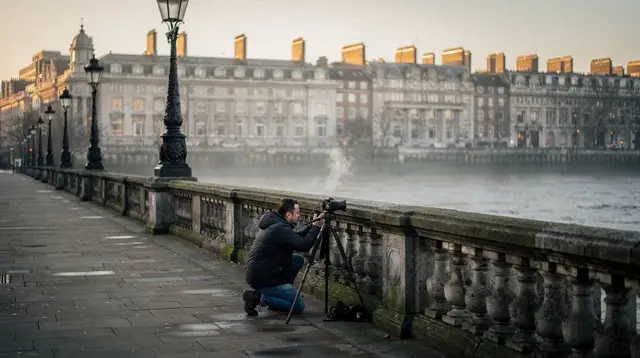
Three days in London: Westminster, South Bank and the centre
Three days is enough to cover Westminster, South Bank and a third day in the rest of central London without rushing between opposite ends of the city. It is not enough time for a day trip out of town — that belongs on a longer visit. This plan keeps each day in one part of London, on foot or a short Tube ride, and puts the two bookings that actually need advance planning where they belong: Westminster Abbey and the London Eye.
The single most useful thing you can do before day one is set up payment for the Underground and buses. Skip the queue at the ticket machine entirely: tap a contactless bank card or phone directly at the gate, or buy an Oyster card, and fares cap automatically across the day. There is no limit on how many journeys you can take in a day with either option — the only limit that exists is your bank’s per-transaction cap on contactless, currently £100, which has nothing to do with how Transport for London prices your travel. Decide once, on arrival, and you never think about tickets again for three days.
Before day one: cards, timing and bookings
Land, get through immigration (check the UK ETA is sorted before you fly — it is not the same thing as an Oyster card, and it has to be applied for at gov.uk, never a third-party site), then head into central London on whichever line serves the airport you flew into. Once you are on the Underground, tap in with contactless or Oyster at every gate, in and out, on every journey — the system needs both taps to calculate the fare and the daily cap.
Two things need booking before you arrive in London, not on the day:
- Westminster Abbey. Entry is timed and sells out on short notice, especially in summer and around Christmas. A dedicated timed Westminster Abbey entrance ticket gets you a slot without turning up and hoping.
- The London Eye. Also timed, also sells out, especially at sunset. A combined London Eye ride bundled with a Top 20 Sights walking tour covers both the ride and a first orientation walk in one booking.
Everything else in this plan can be decided the night before or the same morning.
Day 1: Westminster
Start early at Westminster itself — the Houses of Parliament and Big Ben are best seen before the pavements fill up. Walk down to Westminster Abbey for your booked slot; budget 60–90 minutes inside, longer if you want the cloisters. The Buckingham Palace guard change runs on published days, usually at 11am — check the current schedule the night before rather than assuming it happens daily, and arrive at least 30 minutes early for a decent view along The Mall or at the palace railings.
Downing Street is viewable only from behind barriers at the end of the street, which takes minutes, not an hour — do not plan a whole morning around it. If you want the fuller Westminster and Royal London story told properly, a guided Royal London Grand Tour covers Westminster, the palace exterior and the surrounding streets with commentary, which is worth it if you would rather listen than read plaques.
Lunch around St James’s Park or Victoria Street — this is not a cheap part of London for food, so a pub lunch or a sandwich in the park both work fine. In the afternoon, walk or take one Tube stop to St James’s Park itself for a slower half hour before the next day’s busier itinerary.
Evening: nothing scheduled. Westminster empties out after office hours, so this is a good night to eat somewhere in the West End or head back to your accommodation early — day two starts on the river.
Day 2: South Bank
Cross to South Bank and start at your booked London Eye slot — morning or late afternoon light both work, sunset slots sell out first. Tate Modern is free to enter (donations welcome) and worth an hour even for visitors who do not usually go to modern art museums, if only for the building itself, a former power station.
Walk the riverside path west to east: London Eye, under Westminster Bridge’s south side, past the Southbank Centre, to Shakespeare’s Globe and on to Borough Market for lunch. Borough Market gets crowded at peak lunch hours — arrive before noon or after 2pm if you want to actually sit down. From there, Tower Bridge and the Tower of London are a further 20–25 minute walk along the river, or two Tube stops if your feet are done for the day; the Tower of London and Crown Jewels deserve their own half-day if you decide to add them rather than squeezing them in.
If you would rather see South Bank with some structure than wander it alone, a family-friendly castles and bridges walking tour along South Bank covers the riverside landmarks with commentary and works well with kids in tow, since children go free on it.
A Thames river cruise is a good alternative or addition to the walk if your legs are tired by mid-afternoon — see the Thames river cruises guide for how the boats fit into a South Bank day. Evening options on South Bank include Shakespeare’s Globe (if there is a performance that night) or simply staying by the river as it lights up — the view back toward Westminster and the Houses of Parliament after dark is one of the better free things to do in London.
Day 3: the rest of central London
Day three is for whichever part of central London you have not yet seen — the choice depends on your interests, so pick one focus rather than trying to cover the West End, Bloomsbury and Kensington all in one day.
If museums are the priority, spend the morning at the British Museum in Bloomsbury — permanent collections are free, as they are at every UK national museum, so budget only for a special exhibition if one interests you. The British Museum and free museums guide lays out which collections are worth the time versus which halls to skip if you are short on it.
If theatre and shopping matter more, spend the day in the West End instead: Covent Garden and Leicester Square in the morning, Oxford Street or Regent Street shopping in the afternoon, then a West End show in the evening — book tickets a few days ahead rather than hoping for a same-day return.
If you want one more guided overview, a combined Top 20 Sights walking tour paired with Westminster Abbey access works even on day three as a way to tie together everything you have already half-seen on foot, since it moves through several neighbourhoods rather than staying in one.
Whichever you choose, keep tapping in and out with the same contactless card or Oyster card you used on day one — the weekly cap kicks in automatically if you are staying more than a few days, and there is nothing to top up or calculate.
Getting the logistics right
| Task | When to do it | Why it matters |
|---|---|---|
| Load Oyster or set up contactless | Before day 1, at the airport or first station | No queueing at machines; fares cap automatically |
| Book Westminster Abbey | Before you fly | Timed entry sells out, especially spring–summer |
| Book the London Eye | Before you fly | Timed slots sell out, especially at sunset |
| Check the Buckingham Palace guard schedule | Night before day 1 | It does not run every day |
| Book a West End show (if doing one) | A few days ahead | Popular shows sell out same-day |
Prices for tickets and tours move with demand and season, so treat any figure you see elsewhere as a guide, not a fixed number — check the current price on the booking page itself before you commit.
Where to base yourself for this plan
Staying somewhere within walking distance of a Tube or Overground station in central London — Westminster, Bloomsbury, the West End or South Bank itself — keeps every day in this itinerary within 20–30 minutes of your accommodation. Areas further out (East London, Camden, Greenwich) are worth a visit on a longer trip but add unnecessary travel time to a plan this tight; see where to stay in London options if you are still deciding, or the broader things to do in London hub if you decide to extend the trip beyond three days.
FAQ: three days in London for first-time visitors
Is three days enough time for London?
Three days is enough for Westminster, South Bank and one more area of central London, which is what this itinerary covers. It is not enough for a day trip outside the city — Windsor, Oxford or Stonehenge need a fourth day at minimum, ideally a fifth.
Do I need to book Westminster Abbey and the London Eye in advance?
Yes for both. Westminster Abbey sells timed slots that sell out on short notice, and the London Eye does the same, especially around sunset. Walking up without a booking risks being turned away or waiting for the next available slot.
Should I get an Oyster card or use contactless?
Either works the same way on the Tube, bus, DLR and Overground, with fares capped automatically per day and per week. Contactless (a bank card or phone) needs no setup at all; Oyster is worth it mainly if your bank card charges foreign transaction fees. Neither has a limit on how many journeys you take — only your bank’s contactless transaction cap, currently £100, applies.
Is the London ETA the same as an Oyster card?
No. The ETA (Electronic Travel Authorisation) is an entry permission you apply for before you fly, at gov.uk only, and it is required for most visitors including EU nationals. Oyster and contactless pay for journeys once you are already in London. They solve two completely different problems.
Are London’s museums really free?
The permanent collections of the national museums — the British Museum, National Gallery, Tate Modern, Tate Britain, the V&A, the Natural History Museum and the Science Museum among others — are free to enter. Special or touring exhibitions inside them usually charge separately.
What if it rains during my three days?
Assume it might, at any time of year — London’s weather is changeable rather than seasonal in the tropical sense, and cloud cover is common even in summer. Layers and a light waterproof cover you better than one heavy coat, and each day in this plan has an indoor fallback (the Abbey, Tate Modern, the British Museum) if the outdoor walking parts get cut short.
Can I fit in a day trip if I only have three days?
Not comfortably. Day trips to places like Windsor, Oxford or Stonehenge take most of a day including travel, which would mean dropping one of the three areas in this plan. If a day trip matters more to you than seeing all of central London, consider a five-day London itinerary instead, which has room for both.
tours.3 days
Verified deep-linked GetYourGuide tours. Book through these links and we earn a small commission at no cost to you.
GetYourGuide does not provide a product photo for this activity — the image shows the meeting point, photographed by us.