West End tickets and attractions: what's free and what's worth booking ahead
What's actually free in the West End, and what needs a booked ticket?
Nothing in the West End itself is a national museum, so there's no blanket free entry here the way there is in Bloomsbury or South Kensington. Piccadilly Circus, Leicester Square, Covent Garden's piazza and Soho's streets cost nothing to walk through, but theatre shows, comedy clubs, guided pub experiences and most sit-down attractions are ticketed and often sell out on the day.
Free versus paid in the West End
The West End confuses first-time visitors for a reason that has nothing to do with the district itself: London’s museum-going culture trains people to expect free entry everywhere, and the West End is the one part of central London where that habit doesn’t apply. There’s no national museum here. The British Museum is in Bloomsbury, the V&A and Natural History Museum are in Kensington-Chelsea, Tate Modern is on the South Bank. What the West End has instead is theatre, shopping, nightlife and street life — and almost all of the things worth doing here cost something.
What’s genuinely free: walking the Covent Garden piazza and watching the licensed street performers (who work for tips, not tickets), wandering Soho’s streets and Chinatown, standing in Piccadilly Circus under the advertising screens, browsing Regent Street and Oxford Street shopfronts, and sitting in Leicester Square. None of that needs a booking.
What’s paid: every West End show, comedy club, guided pub crawl or themed tour, and most sit-down attractions in the area. The gap between these two categories is the single most useful thing to understand before planning a day here.
Theatre: the reason most people come
West End theatre is the district’s main draw, and it runs on advance booking. Long-running hits — Six the Musical, The Lion King, Wicked, Hamilton — routinely sell out weekend evenings and school-holiday performances weeks in advance. Walking up on the night for a hit show and expecting a seat is optimistic at best.
Same-day and next-day discount booths cluster around Leicester Square and sell reduced tickets to whatever hasn’t sold for that performance. They’re a real option if your evening plan is flexible (“we’ll see whatever’s cheap tonight”), but they’re not a plan if there’s one specific show you’ve come to London to see. For that, book ahead through the show’s official site or a trusted platform.
a ticket to The Lion King in the West End and a ticket to Six the Musical are both bookable well ahead of your dates, which matters more here than for almost anything else in Central London.
| Show type | Typical price range | Book ahead? |
|---|---|---|
| Long-running musical (evening, weekend) | £45–£150 | Yes, weeks ahead for good seats |
| Long-running musical (weekday matinee) | £25–£70 | A few days often enough |
| Comedy club night | £15–£35 | A few days to a week |
| New play or shorter run | £20–£90 | Varies — check the run’s popularity |
Prices move with demand and seat location, so treat this table as a range for planning, not a quote — check the fare for your actual date on the booking page.
Comedy and nightlife
Soho carries most of the West End’s comedy and late-night scene. A club circuit runs multiple sets a night, often with a mix of headline acts and rising comedians, and tickets are cheaper and more available than theatre — same-week booking is usually enough. a comedy club ticket in the West End is a lower-commitment evening than a full musical if your dates are flexible or you’re deciding at short notice.
Soho by day and Soho by night are close to two different places. During the day it’s independent coffee shops, record stores, vintage clothing and a workday crowd. From early evening the bars fill, comedy venues open their doors, and by 10pm the streets around Old Compton Street and Dean Street are dense with people. Neither version is “more real” than the other — plan for whichever one matches what you want from the visit.
Covent Garden: market, piazza, opera house
Covent Garden was a functioning fruit, vegetable and flower market until 1974, when trading moved out and the covered market building was restored as shops and restaurants. The piazza in front of it is where the licensed street performers work — jugglers, opera singers, escapologists — on a rotating schedule, and it’s free to watch, though tips are expected if you stop for a full act.
The Royal Opera House sits on the piazza’s northeast corner; the London Transport Museum is on the southeast side. Covent Garden also has a genuinely good, if pricier, restaurant scene, and it’s a reasonable lunch stop between a morning at the British Museum and an evening show.
For something with a fixed itinerary and a guide who knows the area’s history, a historic pub experience through the West End covers several of Covent Garden and Soho’s older pubs in one outing, which is a useful way to see both districts without planning the route yourself.
Shopping: Oxford Street, Regent Street, Carnaby Street
The shopping stretch sits at the West End’s northern edge and is walkable from Piccadilly Circus in under ten minutes. Oxford Street is the high-volume, chain-heavy spine — flagship stores, department stores including Selfridges, and heavy foot traffic most of the day. Regent Street curves south from Oxford Circus toward Piccadilly Circus with a more architecturally uniform, slightly upmarket run of shops. Carnaby Street, tucked just west of Regent Street, is smaller and more independent, with a history in 1960s fashion that it still trades on.
None of this needs a ticket, but it does need time management: Oxford Street on a Saturday afternoon is one of the most crowded pedestrian stretches in London, and cutting through side streets is often faster than pushing down the main road.
Crowds and when to book ahead
The West End’s ticketed attractions and shows share one pattern: demand concentrates on weekend evenings, school holidays, and the weeks around Christmas. Outside those windows, availability opens up noticeably, even for popular shows. If your trip dates are flexible, a weekday matinee is both cheaper and easier to book than a Saturday night performance.
A few shows and experiences genuinely sell out, not just sell down — recent long-running hits with strong reviews or a limited cast run being the main risk. If there’s one specific thing on your list, book it before you book anything else for that day, including dinner reservations, so the show’s start time sets your schedule rather than the other way round.
a ticket to Oh, Mary! in the West End is a good example of a shorter, buzzier run where availability can tighten faster than for an established long-runner — worth checking early if it’s on your list.
The pinch point isn’t only the show itself. Shaftesbury Avenue, the stretch that runs past several of the biggest theatres, becomes genuinely difficult to walk through between about 7pm and 7:45pm on weekday evenings and even more so on Friday and Saturday, as several thousand people converge on box offices within the same fifteen minutes. Arriving twenty minutes before curtain rather than five buys enough slack to collect tickets, use the toilet and find your seat without rushing — and avoids the worst of the pavement crush outside the venue.
If you only have half a day in the West End
Most visitors don’t give the West End a full day on its own; it’s more often stitched between Bloomsbury in the morning and dinner before an evening show, or added on to a Covent Garden lunch. If that’s your situation, the honest priority order is: walk the Covent Garden piazza first, since the street performance schedule is unpredictable and worth catching whenever it lines up; then Piccadilly Circus and a short stretch of Regent Street, which take under an hour combined; then decide between Soho (food, atmosphere, browsing) and the shopping stretch of Oxford Street, because doing both properly in the same afternoon means rushing both. Skip trying to “do” all three shopping streets — Oxford Street, Regent Street and Carnaby Street each reward slow browsing, and treating them as a checklist to tick off in ninety minutes defeats the point of any of them.
If theatre is the actual reason for the half-day, work backwards from the curtain time instead: allow at least ninety minutes before the show for dinner somewhere that isn’t directly on the pre-theatre rush (a few streets into Soho rather than immediately by the theatre door usually means a calmer meal and a fairer bill), and treat everything else — Covent Garden, shopping — as filler around that fixed point rather than the plan itself.
Accessibility in the West End
West End theatres are, almost without exception, older buildings that have had access retrofitted rather than designed in from the start, so provision varies venue by venue in a way it doesn’t in newer attractions elsewhere in London. Wheelchair-user spaces, step-free routes from the street to the auditorium, and accessible toilets exist at most major theatres, but the details — how many spaces, where they are relative to the stage, whether there’s a lift or only stairs from the foyer — differ enough that checking with the specific theatre’s box office before booking is worth the extra call, rather than assuming the layout will match a theatre you’ve been to before.
Street-level access around the district is more consistent: the Covent Garden piazza, Leicester Square and the main routes around Piccadilly Circus are flat and paved, with dropped kerbs at most crossings. The weak point is often the Tube, not the streets above it — Covent Garden station has no lifts and relies on a long spiral staircase or a slow, often-queued lift limited to staff and those who need it, so Leicester Square or Piccadilly Circus stations, both step-free at platform level on the relevant lines, are the more reliable way in and out of the area for anyone who can’t use stairs.
What disappoints
Two things catch people out here more than anywhere else in central London. The first is price creep around show times: restaurants within a couple of minutes’ walk of a theatre often run a fixed pre-theatre menu that costs more per course than the same kitchen’s normal evening menu, on the reasonable assumption that a captive, time-pressed audience won’t shop around. Walking an extra five or ten minutes into Soho or Covent Garden’s quieter edges before choosing where to eat usually finds a better meal for less.
The second is the sheer density of people at specific pinch points and times — Leicester Square on a Saturday night, the pavements around Shaftesbury Avenue just before curtain-up, Oxford Street on any weekend afternoon. None of it is dangerous, but it’s a real contrast to the calmer parts of London, and visitors expecting the whole West End to feel like a pleasant stroll are sometimes surprised by how physically crowded a fifteen-minute window can get. Neither issue is a reason to avoid the area — they’re simply worth planning around rather than discovering on the night.
Getting there and getting around
The West End sits between Bloomsbury to the north, South Bank across the river, and the City to the east. Piccadilly Circus, Leicester Square, Covent Garden, Oxford Circus and Tottenham Court Road stations put most of the district within a five- to ten-minute walk of a Tube exit, so a single Oyster or contactless tap covers the whole visit — no separate ticket needed for the area itself, only for what you book once you’re there.
Evening shows finishing around 10 or 10:30pm coincide with the Tube’s busiest late window; allow extra time if you’re connecting to a mainline station like Paddington or King’s Cross for an early departure the next morning.
Planning a full day
A realistic day pairs one paid anchor — a matinee, a comedy show, a guided pub outing — with the free wandering that costs nothing: a morning in Covent Garden’s piazza, a walk down Regent Street, lunch in Chinatown, then the booked activity in the evening. Trying to fit two ticketed shows into one day is possible but tight, since most run two to three hours including an interval, and West End venues don’t leave much slack between a matinee finishing and an evening performance starting.
For a wider view of what else pairs well with a West End evening, the things to do in West End overview groups options by category, and the London theatre tickets guide goes deeper into how West End booking actually works, seat by seat, if theatre is the main reason for the trip.
FAQ: West End attractions and tickets
Are any West End attractions free to enter?
The West End itself has no national museums with free permanent collections — that’s Bloomsbury (British Museum) and South Kensington. In the West End, walking through Covent Garden’s piazza, Piccadilly Circus, Leicester Square and Soho’s streets costs nothing, and street performers in Covent Garden perform for tips, not a ticket.
Do I need to book West End theatre tickets in advance?
For long-running hits — Six the Musical, The Lion King, Wicked — yes, especially for weekend evenings and school holidays, when good seats sell out weeks ahead. Same-day and day-of-week discount booths exist around Leicester Square, but they’re a gamble for the most in-demand shows, not a reliable plan.
How much does a West End show cost?
Budget roughly £25 to £150 depending on the show, seat and day, with West End producers and resale sites both setting prices that move with demand. Check the exact fare on the booking page for the date you want rather than treating any figure here as fixed.
What’s the difference between Piccadilly Circus, Leicester Square and Covent Garden?
Piccadilly Circus is a traffic junction with illuminated advertising screens, a five-minute walk from Leicester Square, which is ringed by cinemas and half-price ticket booths. Covent Garden is a former fruit and vegetable market about ten minutes further east, now a covered piazza with shops, street performers and restaurants.
Is Soho worth visiting during the day or only at night?
Both. By day Soho is dense with independent coffee shops, record stores and restaurants; by night it’s London’s main concentration of bars, comedy clubs and late licensing. Chinatown, on Soho’s southern edge around Gerrard Street, is worth a daytime visit for food alone.
Can I get discount West End theatre tickets on the day?
Same-day discount booths near Leicester Square sell reduced-price tickets to selected shows, but availability depends entirely on what hasn’t sold that day — treat it as a possibility for flexible plans, not a strategy for a specific must-see show on a specific night.
Are West End shopping streets (Oxford Street, Regent Street) part of this same area?
Yes — Oxford Street and Regent Street sit at the northern edge of the West End theatre and entertainment district, within walking distance of Piccadilly Circus and Soho, so a day combining a show, shopping and a Soho meal is realistic without much transit time.
Is the West End accessible for visitors with mobility needs?
Unevenly. Most West End theatres are older buildings retrofitted for access rather than built for it, so step-free routes, accessible toilets and wheelchair-user seating exist but vary a lot by venue — always contact the theatre’s box office directly before booking rather than assuming a standard layout. Covent Garden’s piazza, Leicester Square and the main pavements around Piccadilly Circus are level and manageable; the Tube stations serving the area are a mixed picture, with Covent Garden station in particular having no lifts and a long spiral staircase, so Leicester Square or Piccadilly Circus station are usually the better step-free entry points.
What do people find disappointing about the West End?
The area immediately around theatre entrances before a show: overpriced pre-theatre menus, a genuine crush of people on Shaftesbury Avenue and around Leicester Square at curtain-up, and restaurants that turn tables fast because they know a show is starting. None of that is a reason to skip the West End, but it’s worth knowing before you plan a leisurely dinner right before an 7:30pm curtain.
London Eye and top attraction tickets on GetYourGuide
Verified deep-linked GetYourGuide tours. Book through these links and we earn a small commission at no cost to you.
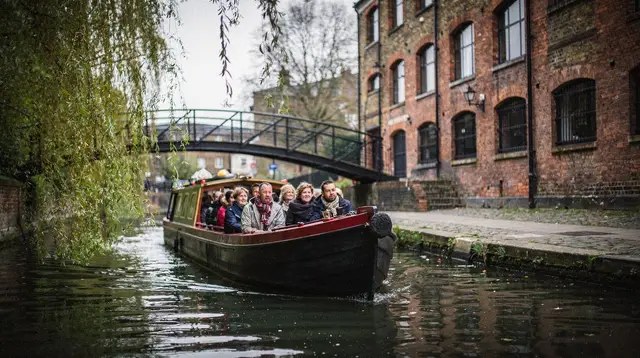
GetYourGuide does not provide a product photo for this activity — the image shows the meeting point, photographed by us.