Jack the Ripper tour: is it too dark?
I went into my first Jack the Ripper tour expecting a ghost walk with jump scares. What I got was closer to a lecture on Victorian poverty, policing failures and tabloid journalism, with five unsolved murders as the spine. That gap between expectation and reality is the first thing worth knowing before you book one.
What these tours actually cover
Whitechapel Ripper tours trace the streets around Durward Street, Hanbury Street, Berner Street and Mitre Square, where the five “canonical” victims — Mary Ann Nichols, Annie Chapman, Elizabeth Stride, Catherine Eddowes and Mary Jane Kelly — were killed in the autumn of 1888. A decent guide spends as much time on the East London of 1888 as on the murders themselves: overcrowded lodging houses, the docks, waves of immigration from Ireland and then Eastern Europe, and a police force under pressure from a press that had just discovered mass-circulation crime reporting.
The uncomfortable fact a good tour states plainly: nobody was ever caught. There was no trial, no confession that held up, no verdict. Every “this is who he really was” claim you hear, whether it points to a royal physician, a painter, or a Polish barber, is a theory built decades later from thin evidence. I’d be wary of any guide who states a suspect as settled fact rather than one possibility among a long list historians still argue about.
What has actually survived
This is where I’d manage expectations hardest. Most of the physical Whitechapel of 1888 is gone. The Blitz took some of it, slum clearance took more, and the last few decades of redevelopment — new-build flats, the Overground, encroaching Shoreditch gentrification — have taken most of the rest. Durward Street, where Mary Ann Nichols was found, bears no resemblance to the narrow lane in old photographs. Mitre Square still has its shape but not its Victorian buildings. What you are mostly looking at is where something happened, marked by a guide holding up a laminated photo and asking you to imagine the rest.
That is not a criticism of the format so much as a fact to know going in. If you want intact Victorian streetscape, this isn’t the London for it — try a Bloomsbury or Westminster walk instead, both areas where far more of the historic fabric actually survives. If you’re fine with imagination doing some of the work, Whitechapel still delivers atmosphere: narrow alleys, old pub frontages, the enormous Georgian silhouette of Christ Church Spitalfields looming over the whole area.
The sensationalism problem
There is a real range in quality here, and it’s worth naming. Some operators lean hard into gore — full crime-scene descriptions, dramatic reveals, guides in Victorian costume doing jump-scare stops in dark alleys. Others run it as social history with the murders as the throughline rather than the entertainment. Neither approach is wrong exactly, but they’re different products, and the marketing rarely tells you which one you’re booking.
My rule of thumb: read the actual reviews, not just the star rating, and look for words like “respectful,” “historical,” or “balanced” versus “theatrical” or “scary.” If a listing leads with “gruesome” and “spine-chilling” in the first line, expect performance over history. If it leads with “Victorian London” and “social history,” expect the reverse.
Who should skip it
A few honest flags. If you find true crime content upsetting regardless of how factually it’s presented, skip this one — the subject matter is five real women murdered, and no amount of “just history” framing changes that. Most operators advise against bringing children under 12, and I’d say that’s sound; some set the bar at 14 or 16, which I’d lean toward if you’re unsure. If you’re already tired after a long day of sightseeing, a two-hour evening walk covering less than a mile at a slow pace is not physically demanding, but it does ask for sustained attention on a heavy topic — not the thing to do on autopilot. If you’re weighing whether an evening walk through this part of the city feels manageable at all, our broader look at how safe London actually is for visitors is worth reading before you commit.
If none of that puts you off, I’d genuinely recommend it over a generic ghost tour. The history is real, well documented, and says something honest about how Victorian London treated its poorest residents and its women. That’s a more useful two hours than a scripted “haunted London” walk with invented ghost stories. Whichever operator you pick, deciding between a shared group walk and a private one comes down to the same trade-offs covered in our group tour versus private tour comparison.
How it fits with the rest of East London
Whitechapel rewards a slower visit than most first-time itineraries allow, the kind of unhurried pace covered in our piece on London’s quieter corners. Beyond the Ripper history, the area sits inside the wider East London patchwork, a short walk or Overground ride from Camden and easily combined with a day of markets and street art if that’s more your pace. Spitalfields Market and Brick Lane are a five-minute walk from the core Ripper sites, so it’s easy to lighten the mood afterward with food rather than heading straight home — our guide to East London food and drink tours covers that side of the neighbourhood on its own.
For a broader-strokes literary and historical angle on the same streets, a London literary walking tour through the city’s darker chapters covers some of the same ground with less true-crime focus and more on the writers who documented this part of London. If Whitechapel’s Victorian poverty story interests you but the murder angle doesn’t, that’s a reasonable alternative rather than a compromise.
Comparing it with a different day out entirely
If dark history isn’t what you’re after at all, it’s worth remembering London and its day trips cover a lot of ground. A grand tour of royal London’s palaces and ceremonial sites is about as far from Whitechapel’s atmosphere as it gets, and pairs well as a contrast if you’re spending several days in the city. For something outside London altogether, the honey-coloured villages covered on a day tour through the Cotswolds villages or a more flexible private Cotswolds day trip from London offer the opposite mood entirely: quiet countryside rather than dense urban history.
For a wider view of how this tour stacks up against other options, our full guide to Jack the Ripper and ghost tours compares operators directly, while London history tours more broadly and London walking tours cover the format beyond just this one theme. If gore-free storytelling matters more to you than the Ripper angle specifically, browsing London ghost and crime tours as a category shows the range before you narrow down to Whitechapel.
What to check before booking
| Question to check | Why it matters |
|---|---|
| Group size | Smaller groups (under 20) hear the guide better and feel less like a queue moving through narrow streets |
| Costume or theatrics | Tells you whether it’s history-led or entertainment-led |
| Start time | Evening slots suit atmosphere; daytime slots suit families or anyone who prefers to see the streets clearly |
| Route length | Most run 0.75-1 mile; check if that matches your walking comfort after a day of sightseeing |
| Age guidance | Follow the operator’s stated minimum age rather than guessing |
Prices for these tours vary by operator and group size, so check the current rate on the booking page rather than relying on a number here going stale. Evening departures are more common than daytime ones, since the atmosphere is part of the draw, but daytime versions exist for families or anyone who’d rather see the actual streets and buildings clearly.
Jack the Ripper tours: the honest questions
Is a Jack the Ripper tour appropriate for children?
Most guides do not recommend these tours for children under 12, and some set the line at 14 or 16. The subject is unsolved serial murder, and even a factual telling includes details that are not suited to younger visitors.
Was Jack the Ripper ever caught?
No. The five canonical murders in 1888 were never solved, no one was ever charged, and the case remains officially open in the sense that no verdict was reached. Every tour that claims to name the killer with certainty is selling a theory, not a fact.
How long does a Whitechapel Ripper tour last?
Typical walking tours run 90 minutes to two hours, covering half a mile to a mile of Whitechapel and Spitalfields streets at a slow pace with frequent stops.
Do the murder sites still exist?
Mostly no. Victorian slum clearance, Second World War bombing, and decades of redevelopment mean most of the original buildings are gone. Guides work from old photographs and maps to point at approximate locations rather than preserved crime scenes.
Is Whitechapel safe to walk around at night?
Whitechapel and Spitalfields are ordinary, busy East London neighbourhoods with markets, restaurants and nightlife. Guided group tours in the evening are routine and well-trodden; use the same common sense you would in any city centre after dark.
What is the difference between a Ripper tour and a general East London history tour?
A Ripper tour is built entirely around the 1888 murders and Victorian Whitechapel. A broader East London history tour covers the same streets but through immigration, the docks, the Blitz and modern regeneration, with the murders as one chapter rather than the whole subject.
tours.Landmarks
Verified deep-linked GetYourGuide tours. Book through these links and we earn a small commission at no cost to you.
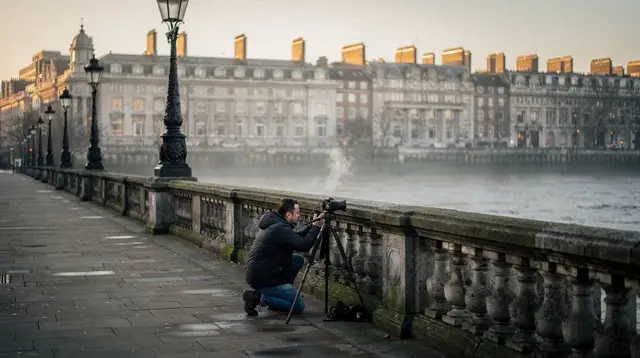
GetYourGuide does not provide a product photo for this activity — the image shows the meeting point, photographed by us.