East London workshops and classes: what's worth booking
What kind of workshops can you actually do in East London?
East London's workshop scene is mostly food and drink: pasta making, British baking, bouquet-and-prosecco sessions, and guided food tours through Brick Lane and Whitechapel markets. Most run 2 to 3.5 hours, need no prior skill, and end with something you eat, drink or take home.
What counts as a workshop here, and what doesn’t
East London gets lumped together a lot with “things to do,” but a workshop is a specific format: you sit down, or stand at a bench, and you make something with your own hands for a fixed block of time, guided by one instructor. That’s different from a food and drink tour, where you walk between stops and eat what someone else has cooked, and different again from a guided history walk through Brick Lane and Whitechapel, where nobody hands you an apron.
In East London specifically, the workshop category is almost entirely food and drink, plus one or two craft sessions built around drinking prosecco while you arrange flowers. There’s no pottery studio circuit or life-drawing scene concentrated here the way you’d find in some other neighbourhoods — the strength of this area is cooking, baking and market culture, and the bookable workshops reflect that. If you came looking for glassblowing or woodworking, you’ll be disappointed; if you came for pasta, bread and Bengali-influenced food history, this is the right patch of the city.
One honest caveat before you book anything: none of these are chef-training courses. They’re single-session, tourist-facing experiences designed to be finished in an afternoon or evening, not the start of a skills path. If you’re hoping to leave able to make pasta from memory a month later, treat the class as a fun starting point rather than a guarantee — most people forget the finer technique within a week and keep the recipe card instead.
Cooking and baking workshops
Dietary needs are worth sorting out before you book rather than on arrival. Vegetarian options are standard across the pasta, baking and bouquet sessions, but vegan substitutions and allergy handling (gluten, nuts, dairy) vary by operator and should be flagged in the booking notes, since a small shared kitchen can’t always improvise a substitute mid-class the way a restaurant can. If a dietary need is non-negotiable, message the operator ahead rather than assuming it will be handled on the day.
Pasta making
An authentic pasta making class with prosecco runs the way you’d expect a proper hands-on session to run: you make dough from scratch, roll it, shape it into at least one or two pasta forms, and finish by eating what you made, glass of prosecco in hand. These sessions are built for people who have never made pasta before — no prior kitchen skill assumed — and they typically run 2.5 to 3 hours including the sit-down meal at the end.
Book the East London pasta making class with proseccoGroups tend to run 8 to 16 people at a shared work surface, so it’s sociable rather than private, which suits couples and friends better than someone wanting one-on-one instruction. If that’s what you want, check the listing for a private option before booking the standard group slot.
British baking
A British baking masterclass built around a Victoria sponge is the closest thing here to a proper home-baking lesson: you learn the technique behind a classic British sponge cake, including how the sponge is layered and finished, and you leave with the cake (or your share of it) rather than just a memory of watching someone else bake one.
Join the British baking masterclass for a Victoria spongeThis runs shorter than the pasta class, usually around 2 to 2.5 hours, and again assumes no baking experience. It’s a reasonable wet-weather option if you’re staying in East London and want an indoor activity that isn’t a museum.
Bouquet making with prosecco
The sip bouquet making workshop is the one non-food craft session in the East London workshop lineup: an instructor talks you through arranging a bouquet while you drink prosecco alongside the group. It’s closer to a social evening activity than a technical skills class, and it’s popular for small celebrations — birthdays, hen parties, that kind of booking — more than for anyone trying to learn floristry seriously.
See times for the sip bouquet making workshop with proseccoSessions run around 2 hours and are seated, so it’s a lower-energy option than the walking-based tours below, useful if you want something in the evening after a full day of sightseeing elsewhere in central London. Non-drinkers aren’t left out — a soft drink alternative to the prosecco is standard on request — but this is still built around a shared glass and a chatty group table, so it suits people happy with that format more than someone wanting a quiet, heads-down craft session.
Where a food tour fits in
A food tour is not a workshop, but it’s worth putting next to the cooking classes because people mix the two up when planning a day. On a food tour you walk between several stops — a bakery, a market stall, a curry house, a bagel counter — tasting small portions at each one while a guide talks about the food’s history and the neighbourhood around it.
The Eating London East End food tour is one of the better-known versions of this, running roughly 3 hours and covering ground through Brick Lane and Whitechapel on foot, with 5 to 7 tasting stops along the way.
Check availability for the Eating London East End food tourThere are several near-identical variants of this format bookable in the area — an East End food market tour, a food tour with tastings, and a “No Diet Club” version that leans into pub food and market snacks rather than a single cuisine. If you’re choosing between them, the difference is mostly in exact stops and pace rather than format: all involve 2.5 to 3.5 hours of walking and eating, none involve you cooking anything yourself. Come hungry but not starving — you’ll be full by the third or fourth stop on most of these.
Brick Lane’s curry houses and Bangladeshi bakeries mean halal and vegetarian tastings show up on most of these routes without you needing to ask, but a strict dietary requirement is still worth confirming with the operator ahead of time — the exact stops on a given day’s route aren’t always fixed, and a market stall can’t always improvise a substitute on the spot the way a sit-down restaurant would.
Brick Lane and Whitechapel, beyond the food
Brick Lane and Whitechapel carry more layers of history than the food scene alone suggests, and two other guided walk formats are worth knowing about separately from workshops.
A Jewish East End guided walking tour covers the area’s 19th- and 20th-century immigrant history: waves of Jewish settlement, the garment trade that grew up around Brick Lane and Spitalfields, and the synagogues and former Yiddish theatres that survive in the street layout even where the buildings themselves have changed use. This runs in daylight, usually 2 to 2.5 hours, and is a history walk rather than a food stop.
Book the Jewish East End guided walking tour
Separately, Jack the Ripper walking tours follow the 1888 murder sites through Whitechapel, usually departing in the evening to match the mood of the story. These are a different category from both the food tours and the Jewish East End walk — same streets, entirely different subject — and it’s worth not booking two similar-sounding “East End history” walks on the same trip without checking which era each one actually covers.
A Bangla Town culture walk covers yet another layer again: the Bangladeshi community that has shaped Brick Lane’s curry houses, sari shops and street life since the 1970s, distinct from both the earlier Jewish East End history and the Ripper-era Victorian history. Three different walking tours, three different centuries, same half-square-mile of streets — worth keeping straight before you book.
All three walking formats are outdoor, whatever the season, which the cooking and baking workshops aren’t. Dress for the weather rather than the calendar: an evening Jack the Ripper walk in December feels considerably colder than the same route in June, and none of these tours shelters you between stops the way a workshop venue does. A waterproof layer is worth carrying on any of them between roughly October and March.
Comparing the formats
| Activity | Format | Typical length | Hands-on? |
|---|---|---|---|
| Pasta making class | Workshop | 2.5–3 hrs | Yes, you cook |
| British baking masterclass | Workshop | 2–2.5 hrs | Yes, you bake |
| Bouquet making with prosecco | Workshop | ~2 hrs | Yes, you arrange flowers |
| East End food tour | Walking + tastings | 2.5–3.5 hrs | No, you taste |
| Jewish East End walk | Walking tour | 2–2.5 hrs | No, walking and listening |
| Jack the Ripper tour | Walking tour | ~2 hrs, evening | No, walking and listening |
| Bike tour of East London | Cycling | 3.5 hrs | Physically active, not a class |
Prices vary by season and group size, so treat any figure you see quoted elsewhere as a rough range rather than fixed — check the current price on the booking page before you commit to a date.
If you only have one evening free
With a single evening to spend on this side of the city, the honest choice comes down to appetite and energy rather than which activity sounds more interesting on paper. If you’ve been on your feet all day walking around central London already, a seated cooking or baking workshop is the easier option — you sit or stand in one spot, and it ends with a meal rather than more walking. If you’ve had a low-activity day and want to actually see the streets, a Jack the Ripper or Jewish East End walk covers more ground and gives you the neighbourhood itself rather than a classroom setting.
Trying to fit two of these into one evening is possible but tight: a 2.5-hour cooking class followed by a 2-hour evening walk runs close to 5 hours once you allow time to get between the venue and the meeting point, which usually means starting in the late afternoon rather than after dinner. For most visitors with only one evening in East London, picking one format and doing it properly beats rushing between two.
Getting there and practical notes
Most of the workshop venues sit around Shoreditch and Brick Lane, an easy walk from Liverpool Street or Shoreditch High Street. Food and history walking tours more often start near Aldgate East or Liverpool Street station, since that puts the group at the southern end of Brick Lane to begin. None of this needs a car — driving in London is not something you want to do for a workshop that starts and ends within a few streets, and remember that the UK drives on the left if you are renting a car for a day trip elsewhere.
Book cooking and baking workshops several days ahead, since sessions run on fixed weekly slots with a capped number of seats — unlike a museum you can just turn up to, a workshop with sold-out seats has nothing to offer you that day. Food tours run more frequently but weekend afternoon slots in summer still sell out a few days out. If you’re building a longer stay around this side of the city, see what else is bookable across East London’s food and drink tours and its walking tours more broadly, or look at things to do across East London for the fuller picture beyond workshops.
For an active alternative that isn’t food-based, an East London bike tour covers roughly 3.5 hours and a wider stretch of ground than any walking format, useful if you’d rather cover ground on two wheels than stand at a cooking bench. And if you’re deciding whether a hands-on class or a guided walk suits your day better, it comes down to appetite and energy: workshops are seated or standing in one place and end with something to eat or keep, while the walking tours cover more ground and more history per hour.
FAQ: East London workshops and classes
Do East London workshops require any prior experience?
No. Pasta making, baking and bouquet workshops are built for complete beginners, with an instructor working in English and showing each step before you copy it. If a listing says advanced or intermediate, it will say so clearly in the description.
How long does a typical East London workshop last?
Cooking and baking classes run 2 to 3.5 hours, including the eating-what-you-made part at the end. Food and walking tours through Brick Lane and Whitechapel run 2.5 to 3.5 hours and cover 2 to 3 kilometres on foot.
Is a food tour the same thing as a cooking class?
No. A food tour is guided walking with tastings at several stops; you watch and eat but don’t cook. A workshop or class has you doing the hands-on part yourself, at a fixed venue, with an instructor.
Are East London workshops suitable for a group or a couple?
Yes, most small-group workshops take couples, friends and solo travellers in the same session, typically 8 to 16 people. Private group bookings are usually available on request for larger parties.
What’s the difference between a Jack the Ripper tour and a Jewish East End walking tour?
A Jack the Ripper tour follows the 1888 murder sites and Victorian Whitechapel street history after dark. A Jewish East End walking tour covers a different, longer history: 19th and 20th century immigration, synagogues and the garment trade around Brick Lane and Spitalfields, usually run in daylight.
Do you need to book East London workshops in advance?
Yes, for cooking, baking and bouquet workshops, since sessions run on fixed weekly or weekend slots with a capped number of seats. Food tours have more frequent departures but weekend afternoons still sell out a few days ahead in summer.
Where in East London do most workshops take place?
Most cooking and craft workshops are based around Shoreditch and Brick Lane, walkable from Liverpool Street or Shoreditch High Street. Food and walking tours usually start near Aldgate East or Liverpool Street station.
Can you get vegetarian or halal options on a Brick Lane food tour?
Usually yes, but it depends on the specific stops that day rather than a fixed menu you can pre-select. Brick Lane’s curry houses and Bangladeshi bakeries mean halal and vegetarian tastings are common, but a strict vegan or allergy requirement should be flagged to the operator before booking, not mentioned on the day, since substitutions at a working market stall aren’t always possible.
What should you wear for an evening walking tour in East London?
Something warmer than you’d think, plus a waterproof layer regardless of season, since these are outdoor walks that don’t shelter you between stops the way a workshop venue does. Jack the Ripper tours in particular run after dark and often in the colder months, when Whitechapel’s side streets feel a few degrees colder than the main road.
Hands-on workshops and craft classes on GetYourGuide
Verified deep-linked GetYourGuide tours. Book through these links and we earn a small commission at no cost to you.
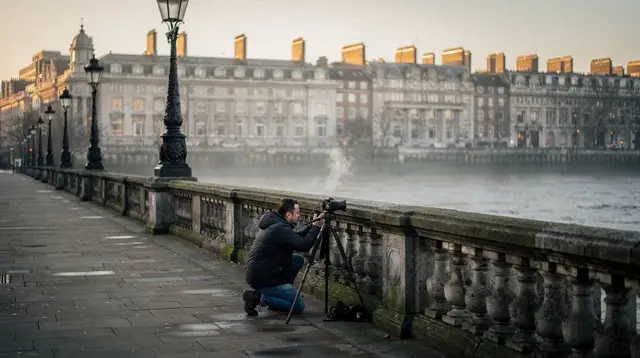
GetYourGuide does not provide a product photo for this activity — the image shows the meeting point, photographed by us.