London attractions and tickets: what's free, what isn't, and what to book ahead
What's actually free to visit in London, and what do you have to pay for?
London's national museums and galleries — the British Museum, National Gallery, Tate Modern, Tate Britain, V&A, Natural History Museum, Science Museum, National Portrait Gallery — are free to enter, with charges only for special exhibitions. Historic sites and experiences (Tower of London, Westminster Abbey, London Eye, Warner Bros. Studio Tour) are paid, and the busiest ones sell out on peak dates without advance booking.
Free versus paid, in one place
London’s reputation for being expensive doesn’t apply evenly. A first-time visitor can spend two or three days seeing world-class collections without paying a single entrance fee, then spend £30-£100 on a single afternoon at a handful of paid sites. Knowing which category an attraction falls into before you plan your days saves both money and disappointment — nobody wants to discover at the door that a “must-see” costs £34 and the next available slot is tomorrow.
This guide sorts London’s best-known attractions into free and paid, explains why advance booking matters for some and not others, and points to where to go for the street-by-street detail. It’s a starting point, not the final word on any single site — for that, see the London museums and galleries guide or the royal London tours guide.
What’s free: the national museums
The core of free London is a set of national museums whose permanent collections cost nothing to enter, a policy that has held for decades regardless of who’s in government.
| Museum | Area | Known for |
|---|---|---|
| British Museum | Bloomsbury | Rosetta Stone, Parthenon sculptures, Egyptian mummies |
| National Gallery | West End | Van Gogh, Turner, old masters, Trafalgar Square |
| National Portrait Gallery | West End | Portraits from Tudor royals to contemporary figures |
| Tate Modern | South Bank | Modern and contemporary art in a former power station |
| Tate Britain | Westminster | British art from 1500 to today |
| Victoria and Albert Museum | Kensington-Chelsea | Design, fashion, decorative arts |
| Natural History Museum | Kensington-Chelsea | Dinosaur skeletons, blue whale, earth sciences |
| Science Museum | Kensington-Chelsea | Interactive science and technology exhibits |
Two things worth knowing. First, “free” covers the permanent collection only — a headline temporary exhibition at the British Museum or Tate Modern is usually ticketed separately, sometimes £20-£25. Second, some of the busiest museums use free timed-entry booking to manage queues at peak times, so a few minutes online before you go can mean walking straight in instead of standing outside. Neither of these is an entry fee; both are worth checking on the museum’s own site the day before.
For the detail on what’s inside each museum and how to plan a visit around one, see Bloomsbury museums and galleries, West End museums and galleries, South Bank museums and galleries and Kensington-Chelsea museums and galleries.
What’s paid: the attractions that need a ticket
Outside the national museums, most of London’s headline sights charge admission, and several are run privately or by independent charities rather than the state, which is why the free-museum rule doesn’t extend to them.
| Attraction | Area | Roughly | Book ahead? |
|---|---|---|---|
| Tower of London | Tower & the City | £30-£40 | Strongly recommended |
| Westminster Abbey | Westminster | £25-£30 | Recommended |
| London Eye | South Bank | £30-£40 | Recommended, peak dates |
| Shakespeare’s Globe (tour) | South Bank | £15-£25 | Useful, not essential |
| Warner Bros. Studio Tour | Leavesden | £50-£60 | Essential |
| Hampton Court Palace | Richmond-Kew | £25-£30 | Useful |
| Windsor Castle | Windsor | £30-£35 | Recommended |
Prices move with the season and how far ahead you book, so treat this table as a sense of scale rather than a quote — the exact figure for your date sits on the booking page, not here. Buckingham Palace’s State Rooms only open to visitors for part of the year (usually summer), which is a separate question from watching the Changing of the Guard outside, which is free and happens on a published schedule.
For the palaces, the Tower and the guard ceremony specifically, see Westminster and royal London and Tower and City royal London. For the Warner Bros. Studio Tour, which sits north-west of the city in Leavesden and needs its own half-day, see London Harry Potter locations.
Why advance booking actually matters here
Advance booking isn’t a sales tactic for every London attraction — for a quiet Tuesday morning at a mid-size museum, walking up works fine. It matters specifically where two things overlap: limited daily capacity and high demand. The Tower of London controls numbers through the Crown Jewels vault and can sell out its busiest weekend slots weeks ahead. The Warner Bros. Studio Tour runs timed entries all day and regularly sells out school-holiday dates a month or more in advance. The London Eye’s capsules move on a fixed schedule, so a sold-out time slot means waiting for the next one, not queue-jumping.
The honest version: booking ahead rarely saves money on these sites (prices are usually the same or marginally higher on the day), but it reliably saves a wasted trip. Arriving at the Tower of London on a August Saturday with no ticket often means being turned away entirely, not queueing.
Free museums don’t carry this same risk in the same way — worst case with a free timed-entry slot is a short wait, not a locked door. That asymmetry is the practical reason this guide treats “free” and “paid” as different planning problems, not just different price tags.
When crowds actually build
Attraction crowding in London follows a fairly predictable rhythm, and it’s rarely the time of day people expect. School holidays — roughly Christmas and New Year, February half-term, Easter, and the long summer break from mid-July to early September — push midweek museum queues to weekend levels at family-oriented sites, especially the Natural History Museum and the Science Museum. Within a single day, the worst crowding at ticketed attractions usually falls between 11am and 2pm, once the first wave of hotel breakfasts is done and before evening slots free up.
Arriving at opening time or booking a late-afternoon slot avoids most of it. The Tower of London and Westminster Abbey both open earlier than most visitors assume, and the first hour after opening is consistently the quietest window of the day, even in August. A booked slot for 9am costs the same as one for 1pm but comes with a shorter queue at the door.
Multi-attraction passes: when they pay off
A city pass or explorer ticket bundles several paid attractions into one purchase, sometimes with skip-the-line access included. The math only works in your favour if you’re visiting enough paid sites in a short window — someone spending three days mostly in free museums won’t recoup a pass’s cost, while someone doing the Tower, the London Eye and a boat cruise in 48 hours might.
a flexible pass covering a choice of 2 to 7 paid London attractions is worth comparing against booking each site separately once you know your shortlist. For a single day that mixes a guided overview with entry to a marquee site, a full-day tour taking in London’s main sights removes the logistics of getting between them. A broader city pass bundling top attractions with several tours suits a longer stay with more ground to cover.
For visitors who’d rather see the essentials on foot with someone explaining what they’re looking at, a private walking tour of London’s must-see sights covers a lot in a morning or afternoon without the fixed stops of a bus tour.
If you only have half a day
If a full day for attractions isn’t realistic — a stopover, a single afternoon between meetings, a day trip that eats the rest of the schedule — the honest advice is to pick one paid site and one free museum rather than attempting a paid attraction plus a full loop of Bloomsbury or South Bank. A half-day built around the Tower of London, with its own walls and jewel vault to work through, leaves little room for anything else nearby beyond a walk across Tower Bridge afterwards.
A half-day built around a free museum instead leaves genuine flexibility, since there’s no ticket time to protect and no queue risk if plans slip by twenty minutes either way. For a single half-day with no fixed booking already made, a free museum is the lower-risk choice. For a half-day where seeing one specific paid site matters more than flexibility, book the earliest available slot and treat everything else on the list as optional rather than planned.
A realistic first day: mixing free and paid
A workable first day in London might open with a free morning at the British Museum or National Gallery, since neither needs advance booking and both reward two to three unhurried hours. The afternoon can then shift to a paid, pre-booked slot — the Tower of London or Westminster Abbey — where the ticket in hand means walking past the queue rather than joining it. Evenings are a good time for the London Eye, when the light is better for photos and crowds thin slightly after the day-trip coach groups leave.
This pattern — free morning, booked paid afternoon — scales across a multi-day trip: alternate free-museum mornings with one or two pre-booked paid attractions a day, rather than trying to queue for everything same-day. For a fuller day-by-day structure, see three days in London or five days in London.
What often disappoints
A few honest notes on expectations before you pay. The London Eye’s much-photographed views are frequently less impressive than the photos suggest on an overcast day, which is the default in London rather than the exception — checking the forecast before paying for a specific time slot is worth the two minutes it takes, rather than booking blind and hoping for clear skies.
Westminster Abbey’s interior is genuinely striking, but the volume of visitors moving through on a fixed one-way route means less time to linger at any single tomb or memorial than the ticket price might suggest. The Warner Bros. Studio Tour rewards Harry Potter fans specifically; visitors without much attachment to the franchise sometimes find the four-hour visit longer than the content justifies for them personally. None of this is a reason to skip these sites outright — it’s a reason to set expectations before paying £30-£60 for any one of them.
Attractions beyond the free/paid split
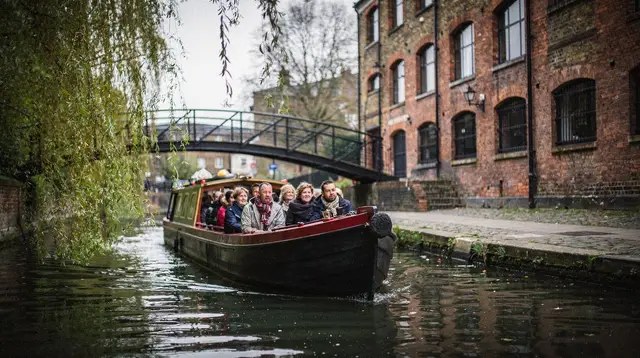
Not everything in London fits neatly into “free museum” or “paid ticket.” Markets, parks and street life cost nothing and need no booking at all — Borough Market on the South Bank, Hyde Park near Kensington, or a walk through Covent Garden in the West End. Thames river cruises sit in a middle ground: paid, but rarely need booking more than a day ahead outside peak summer weekends. Theatre in the West End is its own category entirely, priced by seat and show rather than by attraction, and best planned separately — see the West End theatre guide.
For the boat trips specifically, London Thames cruises and boats covers routes and how far ahead to book. For markets, parks and free outdoor London, the individual area guides linked below go into more depth than fits on this page.
Accessibility across London’s attractions
Accessibility varies more between attractions than London’s general reputation as an accessible city suggests. The national museums are consistently well equipped, with step-free routes, lifts between floors and wheelchairs available to borrow at the entrance, since modern buildings or major renovations funded that work over the past two decades.
Older paid sites are more mixed. The Tower of London has cobbled areas and some stairs inside individual towers that can’t be avoided, though the grounds and main routes stay step-free. Westminster Abbey has a step-free entrance but some areas remain accessible only by a guided route arranged in advance. Booking ahead matters more for visitors with access needs than for anyone else, since most sites can arrange assistance or confirm step-free routes by phone or email but need notice to do it properly. For a fuller borough-by-borough rundown of what’s accessible where, see the accessible London guide.
Where to go next by area
This page deliberately stays at the citywide level — free versus paid, book-ahead versus walk-up. For the attraction-level detail inside each part of London, these guides go deeper:
- Westminster and royal London for the Abbey, Parliament and Buckingham Palace
- Tower and City royal London for the Tower of London and Crown Jewels
- South Bank attractions and tickets for the London Eye and Shakespeare’s Globe
- West End attractions and tickets for Piccadilly Circus and Covent Garden’s paid sights
- Kensington-Chelsea museums and galleries for the free South Kensington cluster
For the destinations themselves rather than the guides, see Westminster, South Bank, West End and the central London overview.
Attractions and tickets FAQ
Are London’s museums really free?
Yes, for permanent collections at the national museums — British Museum, National Gallery, Tate Modern, Tate Britain, V&A, Natural History Museum, Science Museum, National Portrait Gallery. Temporary exhibitions inside these museums usually carry a separate ticket price.
Which London attractions need advance booking?
The Tower of London, Westminster Abbey, the London Eye and the Warner Bros. Studio Tour regularly sell out on weekends, school holidays and summer dates. Booking a few days to a few weeks ahead avoids arriving to a sold-out slot or a long same-day queue.
Is a London sightseeing pass worth it?
It depends on how many paid attractions you plan to visit in a short time. A multi-attraction pass can save money if you’re packing in three or more paid sites in a couple of days, but it adds nothing on days spent mostly in free museums.
Do I need to book free museums like the British Museum?
Not usually for general entry, though the busiest national museums sometimes offer free timed-entry slots online to manage queues at peak times. It costs nothing to check the museum’s own site before going.
What’s the best way to see multiple attractions in one day?
A guided day tour or hop-on hop-off bus can group several sights efficiently, especially for a first visit, but expect a packed schedule with less time at each stop than visiting independently.
Are London attraction ticket prices fixed?
No. Prices vary by date, time slot and how far ahead you book, and they change over time. Treat any figure in this guide as an order of magnitude and check the current price on the booking page before paying.
Where do I find more detail on specific attractions?
This guide covers London as a whole. For attraction-by-attraction detail, museum opening hours and neighbourhood-specific tips, see the guides for each London area linked throughout this page.
What time of day has the shortest queues at London’s paid attractions?
Generally the first hour after opening, before the mid-morning wave of coach and hotel-breakfast groups arrives, and again in the last hour or two before closing. The worst congestion at most ticketed sites tends to fall between 11am and 2pm.
Are London’s paid attractions accessible for visitors with mobility needs?
It varies. The national museums are generally well equipped with step-free routes and lifts, while older sites like the Tower of London have some unavoidable stairs and cobbled ground, though main routes stay accessible. Contacting the attraction ahead of a visit is worth doing for anything beyond general entry.
London Eye and top attraction tickets on GetYourGuide
Verified deep-linked GetYourGuide tours. Book through these links and we earn a small commission at no cost to you.
GetYourGuide does not provide a product photo for this activity — the image shows the meeting point, photographed by us.