London photoshoot locations: best viewpoints, timing and permits
Where's the best place for a London photoshoot?
South Bank and Tower Bridge at sunrise, Primrose Hill or Greenwich Park at golden hour, and Westminster from across the river give the most reliable results with the fewest people in frame. Most public pavements and parks are free to shoot on for personal use; tripods, drones and any commercial crew usually need a permit.
Planning a shoot around London’s light, not against it
London doesn’t give you the kind of reliable blue-sky light you’d plan around in a Mediterranean city. The sky is overcast a lot of the year, and even in July there’s no guarantee of a clean sunset. What London does give you is low, flat, forgiving light for most of the day outside midsummer, and a genuinely wide spread of backdrops within a short Tube ride of each other — river, parks, Georgian terraces, Victorian markets, a skyline that mixes centuries without looking staged.
This page is the generalist starting point. It covers the light, the timing, the crowd patterns and the permit question that apply across the whole city. For location-specific detail — exact angles, which bridge arch to stand under, which gallery corridor has the best window light — the Westminster photoshoot guide and the neighbourhood things to do pages go deeper than a single page covering the whole city reasonably can.
Golden hour, blue hour, and London’s actual daylight
Golden hour in London swings hard between seasons. In December, sunrise is around 8am and sunset around 4pm, so the whole day sits closer to “golden” light than a summer afternoon does. In June, sunrise is before 5am and sunset after 9pm, which means the flattering light happens either very early or very late, with several hours of harsher midday sun in between.
| Season | Sunrise (approx.) | Sunset (approx.) | Notes for shooting |
|---|---|---|---|
| December–January | 8:00am | 4:00pm | Short days, long low-angle light most of the day |
| March–April | 6:30am | 7:30pm | Clocks change late March (GMT to BST) |
| June–July | 4:45am | 9:15pm | Long midday gap between good light windows |
| September–October | 7:00am | 6:30pm | Reliable golden hour without an early alarm |
Blue hour — the 20 to 30 minutes after sunset when the sky holds colour but streetlights and building lights are on — is when most of the classic London skyline shots happen: Tower Bridge, the Shard, Westminster lit up against a deep blue sky. It’s short, so scout your spot in daylight first and be in position before the light starts changing.
One detail the seasonal table above doesn’t show: the clocks themselves move. Britain switches from GMT to British Summer Time (BST, UTC+1) in late March and back again in late October. A sunrise time you noted down in early March can be an hour off by early April, and the same applies in reverse at the end of October. If you’re planning a shoot weeks in advance around a specific sunrise or sunset, check the actual time for your shoot date rather than reusing a figure from a different week — the shift catches out photographers who plan around a fixed “golden hour” as if it never moves.
If you’ve only got a few hours
Most visitors shooting London aren’t spending a full day on it — a photoshoot is usually squeezed around a flight, a show, or one other plan for the day. With two or three hours and one shot you actually want, the honest choice is between depth and breadth: staying in one location and working it thoroughly as the light changes, or moving between two or three spots and getting one solid frame from each.
A single-location session favours South Bank near Tower Bridge or Greenwich Park’s hilltop — both give you a changing angle on the same skyline as the light shifts, without losing time on transit. Moving between locations favours pairing Westminster with South Bank, since they face each other across the river and a walk across Westminster Bridge is the only transit involved. Trying to fit in a third, more distant spot like Primrose Hill or Richmond within the same short window usually means rushing the light at each one rather than getting a considered shot at any of them.
Where to shoot: the short list
A full breakdown of angles and access lives on each destination’s own guide. As a starting point across the city:
- South Bank, walking from the London Eye past the National Theatre toward Tower Bridge, for river views with Westminster or the City as backdrop. Best early morning before the walkway fills up — see the South Bank photo spots.
- Tower Bridge and the City, shot from the south bank near City Hall, gives you the bridge as a clean subject with the City skyline layered behind it — more detail in the Tower of London and Crown Jewels guide for the area around it.
- Westminster, from the opposite bank near the London Eye or from Westminster Bridge itself for Big Ben and the Houses of Parliament — see the Buckingham Palace and Changing of the Guard guide for the wider royal circuit.
- Greenwich Park, uphill from the Royal Observatory, for a wide panorama over Canary Wharf and the City with the Thames curving below — one of the few spots where you get real elevation without a paid viewing platform.
- Richmond and Kew, for green, quiet, less obviously “London” backdrops — deer in Richmond Park at dawn, or the glasshouses at Kew Gardens.
- Primrose Hill, north of Regent’s Park, for a lower, more intimate skyline view that’s popular but rarely as packed as South Bank.
None of these need a tripod-and-permit setup for a handheld or phone shoot. All of them get noticeably busier by mid-morning, especially April through September.
Avoiding the crowds
London’s tourist spots follow a predictable daily rhythm: quiet before 8am, filling steadily through the morning, packed from late morning through late afternoon, thinning again after the dinner hour. A few practical patterns:
- Arrive 30–45 minutes before sunrise if you want an empty frame at a landmark spot — by the time the light is fully up, so are the crowds.
- Weekday mornings beat weekends by a wide margin at almost every central location.
- School holidays (particularly late July through August, and the two weeks around Christmas and New Year) push crowd levels up across the board, including at spots that are quiet the rest of the year.
- Some locations are simply always busy — Tower Bridge at any daylight hour, Covent Garden on a Saturday — and the honest move is to plan the composition around people in frame rather than assume you’ll get an empty shot.
If your priority is a specific empty-street or empty-landmark shot rather than a general walk-and-shoot session, a photographer who already knows the current crowd patterns and access rules saves a lot of trial and error. A private photo session in central London books a local photographer who plans the route and timing around your specific shots rather than you working it out on the day.
Permits: what actually needs one
This is the part visitors most often get wrong in both directions — either assuming a permit is needed for a phone snapshot (it isn’t) or assuming a full commercial shoot needs nothing (it usually does).
Generally fine without a permit:
- Handheld or phone photography on public streets and pavements
- Personal photos in most Royal Parks (Hyde Park, Greenwich Park, Richmond Park) without a tripod
- Casual photos inside most museum permanent galleries, subject to no-flash and no-tripod rules
Usually needs a permit or advance notice:
- Tripods, lighting rigs, reflectors or any freestanding equipment in Royal Parks or on land managed by the City of London
- Any shoot involving a crew beyond you and your subject
- Commercial photography intended for paid or advertising use, even with a small setup
- Drone flights almost anywhere in central London — most of the city sits inside flight restriction zones, and Royal Parks ban drones outright regardless of zone
- Wedding and engagement shoots at specific landmarks — some allow a small shoot informally, others (particularly Royal Parks) charge a fee even for two people and a photographer
Permit requirements are set by whoever manages the land — Royal Parks, the City of London Corporation, individual boroughs, or private landowners like the Southbank Centre — so there’s no single London-wide rule and no single office to call. If a shoot matters to you and you want it done properly rather than risking a mid-shoot conversation with a park attendant, book a photographer who already holds the relevant permits. A wedding photography session in London is arranged with permit-covered locations built in, which removes the guesswork for a day you can’t easily redo.
What tends to disappoint
The single biggest source of disappointment isn’t a permit issue, it’s the weather. London’s overcast, changeable sky means a shoot planned weeks ahead around a specific golden-hour glow can just as easily land under flat grey cloud, with no dramatic colour at all — the light is still usable for portraits, but it isn’t the postcard sunset a lot of visitors picture in advance. Building in a backup date, or accepting that soft, even light is the realistic London default rather than the exception, avoids most of the frustration.
The second is crowding at the handful of spots everyone already knows about. Tower Bridge, the London Eye and Covent Garden are busy at almost any daylight hour in the warmer months, and no amount of early-rising timing removes every other person from frame at the truly iconic angles — the honest approach is to plan the composition around some passers-by being visible, or to accept a quieter but less famous alternative view instead.
Shooting at night
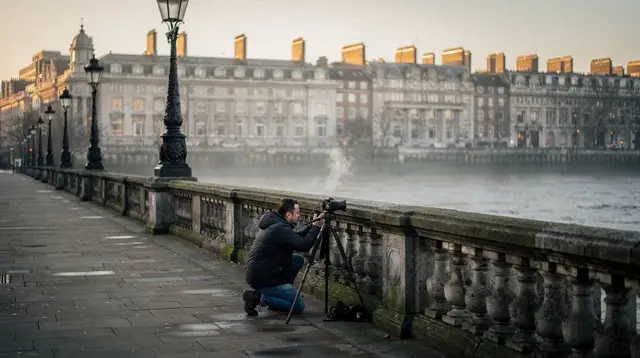
London’s landmark buildings are lit after dark, and the low-light contrast between illuminated stone and dark sky is one of the more distinctive looks the city offers. Tower Bridge, the Houses of Parliament, St Paul’s Cathedral and the South Bank skyline all read well after sunset, though you’ll want a steady hand or a small tripod (checking first whether your chosen spot allows one) and higher ISO settings if you’re shooting handheld.
Personal safety is a normal consideration for solo night shooting, same as any big city — well-lit main routes along the river are generally busy and fine, quieter side streets less predictable after midnight. A guided option removes that consideration entirely: a night photography tour in London takes a small group between several lit landmarks with someone who already knows the routes and the camera settings that work for each spot.
Practical kit notes for a London shoot
- Weather: pack for rain regardless of season — a light waterproof layer and a lens cloth matter more here than in most cities. Overcast skies are common and actually help with even, shadow-free light for portraits.
- Getting between spots: an Oyster or contactless card covers the Tube, bus, DLR and most local trains between locations, with fares capped automatically. For covering ground between several viewpoints in one session without relying on trains, an e-bike tour of London is a faster and more flexible way to string locations together than walking, particularly across a spread-out route like South Bank to Greenwich.
- Timing against opening hours: some of the best interior light — the British Museum’s Great Court, the V&A’s entrance hall — depends on museum opening times, which don’t align with golden hour. Check individual venue hours before building a shot list around them.
- A river view for scale: a Thames cruise gives a genuinely different angle on the skyline than any bankside spot, useful for a wide establishing shot you can’t get standing on land.
- Access for photographers with mobility needs: most Royal Parks have paved paths to their main viewpoints, including the walk up to Greenwich Park’s hilltop, though a few raised or hillside spots involve steps or a slope. The accessible London guide covers step-free routes and viewpoint access in more detail than fits here.
Where to go deeper
This page stays at city level on purpose — light, timing, permits, the handful of viewpoints that work regardless of which neighbourhood you’re focused on. For the angle-by-angle detail on a specific area, the destination and neighbourhood guides go further:
- Westminster photoshoot spots for the Parliament and Big Ben angles specifically
- Best views of London for a ranked list of viewpoints across the whole city
- Walking tours of London if you’d rather combine a scouting walk with a guide’s local knowledge
- Things to do in South Bank for the single busiest and most photographed stretch of riverside in the city
- Westminster, South Bank, Tower and the City, Greenwich and Richmond and Kew destination pages for the wider practical detail on each area
Frequently asked questions about London photoshoots
Do I need a permit to take photos in London?
For a phone or handheld camera on public streets, no. The moment you add a tripod, lighting stands, a drone, a large crew, or you’re shooting for paid commercial work, most parks, bridges and landmark sites expect a permit or at least advance notice.
What’s the best time of day for photos in London?
The hour after sunrise and the hour before sunset give low, warm, directional light and the thinnest crowds. Winter sunrise around 8am is easiest logistically; summer sunrise before 5am is beautiful but means an early alarm.
Is London Eye or Tower Bridge better for a skyline shot?
Tower Bridge gives you the bridge itself as a subject with the City skyline behind it. The London Eye works better as a foreground element shot from South Bank looking toward Westminster, rather than as a viewpoint you shoot from.
Can I fly a drone in central London?
Not casually. Most of central London sits inside flight restriction zones around airports and government buildings, and Royal Parks ban drones outright. Assume no unless you’ve checked current UK Civil Aviation Authority rules and, where relevant, obtained written permission.
Where can I get a golden-hour shot without crowds?
Greenwich Park’s hilltop, Primrose Hill, and the quieter stretches of South Bank past Tower Bridge toward Bermondsey all give you space. Central landmarks like Westminster and Covent Garden stay busy even at sunrise.
Do museums and galleries allow photography?
Most national museums allow personal photography in permanent galleries but ban flash, tripods and selfie sticks, and many restrict cameras in temporary exhibitions. Rules vary by venue, so check before you go rather than assuming.
Is a wedding or engagement shoot allowed at London landmarks?
Yes at many spots with notice, but some require a paid permit even for a small shoot, particularly Royal Parks and sites managed by the City of London. A local photographer who already holds the relevant permits saves you the paperwork.
Does the golden-hour clock change with British Summer Time?
Yes. Clocks move forward to BST in late March and back to GMT in late October, so a sunrise or sunset time that worked one week can shift by an hour within days of the change. Always check the actual sunrise and sunset time for your shoot date rather than relying on a rule of thumb from a different month.
Are Royal Parks photography-friendly for photographers with mobility needs?
Most Royal Parks have paved paths to their best viewpoints, including Greenwich Park’s hilltop and much of Hyde Park, though some raised viewpoints involve steps or slopes. Check accessibility details for a specific park before planning a shoot around a viewpoint that needs level access.
Professional photoshoot experiences on GetYourGuide
Verified deep-linked GetYourGuide tours. Book through these links and we earn a small commission at no cost to you.
GetYourGuide does not provide a product photo for this activity — the image shows the meeting point, photographed by us.