London nightlife and pub culture: a first-timer's guide
What do I need to know about London pubs and nightlife before going out?
Most pubs serve until 11pm or midnight unless they hold a late licence, you order and pay at the bar rather than waiting for table service, and tipping in pubs isn't expected. Where you go matters more than what you do: West End for theatre-district bars, Shoreditch for cocktails, Camden for live music, South Bank and Greenwich for riverside pints.
How pub culture works in London
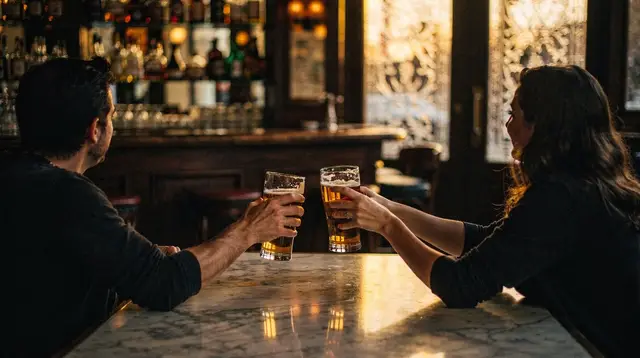
A London pub isn’t a bar with table service. You order and pay at the bar, you carry your own drinks back to a table if you find one free, and you go back to the bar for the next round rather than waiting for a server. Standing at the bar with a drink is completely normal, even for a whole evening — plenty of pubs, especially in the City and around Westminster after work, are standing-room-only from 6pm.
Rounds are the default way groups drink. One person buys for everyone at the table, then it’s someone else’s turn next time. Nobody is keeping a running tab per person the way you might in some other countries, and asking to split every round individually will mark you out as a visitor. If a round feels awkward, buying yourself a drink and quietly getting the next one for whoever bought yours works fine too.
Tipping isn’t expected at the bar. It’s common to say “and one for yourself” when you buy a round for a group of four or more, which the bartender can either pocket as a small tip or ring up as a drink for themselves — either is fine. Beyond that, nobody will chase you for a tip, and leaving one isn’t rude either.
The drinking age is 18, and ID checks are routine on anyone who looks under 25 (sometimes called “Challenge 25”). A passport or UK driving licence works; a photo of your ID on your phone usually doesn’t.
Card and contactless payment is now standard behind the bar — most pubs stopped taking cash-only years ago, and a few smaller ones are contactless-only with no cash accepted at all. Some venues set a minimum card spend of £5-£10 on quieter nights, which is worth knowing before you order a single soft drink and try to pay by card. Splitting one round across several cards is possible but slows the bar down and isn’t really the done thing — better to let one card cover the round and settle up later if it matters.
Closing times: what actually happens
The old rule of “last orders at 11pm” is still the default, but it’s no longer universal. Standard licensing hours run to 11pm, with the bell for last orders around 10:45pm and the pub clearing out by 11:30pm or so. That’s still what you’ll find in a lot of traditional pubs, particularly outside the centre.
In practice, plenty of pubs — especially in Soho, Shoreditch, Camden and parts of East London — hold extended licences that keep them open to 1am, 2am or later, particularly Friday and Saturday. Bars and clubs with late licences go further still. There’s no way to guess this from the outside: a Victorian-looking pub on a side street in Fitzrovia might close at 11pm sharp, while a similar-looking one two streets over runs a late licence to 1am. If a specific closing time matters to your evening, check the pub’s own listing rather than assuming.
One thing that catches visitors out: “last orders” isn’t when you have to leave, it’s when the bar stops serving new drinks. You’ll usually get 20-30 minutes of drinking-up time after that before you’re actually asked to go.
Season changes the picture more than most visitors expect. A beer garden or terrace that feels essential to a summer evening — Bermondsey’s riverside pubs, the courtyards around Borough Market — is a different experience in December, when the same pub is standing-room-only indoors with the windows fogged up. Outdoor heaters and blankets appear from October, but they don’t turn a garden pub into an indoors one. If a specific pub’s appeal is its outside space, check the season before building an evening around it.
Choosing an area by the night you want
London’s nightlife isn’t one scene, it’s several, spread across genuinely different neighbourhoods. This page stays general on purpose — the detail on specific pubs, bars and venues lives in each area’s own guide, linked below.
| If you want… | Head to | What it’s like |
|---|---|---|
| A big, central night out | West End and Soho | Theatre crowds, late bars, dense and loud, easy to walk between venues |
| Cocktail bars and a design-led scene | East London (Shoreditch) | Converted warehouses, small-plates food, younger crowd, later licences |
| Live music and an alternative edge | Camden | Pub venues with bands most nights, market crowd by day, grittier after dark |
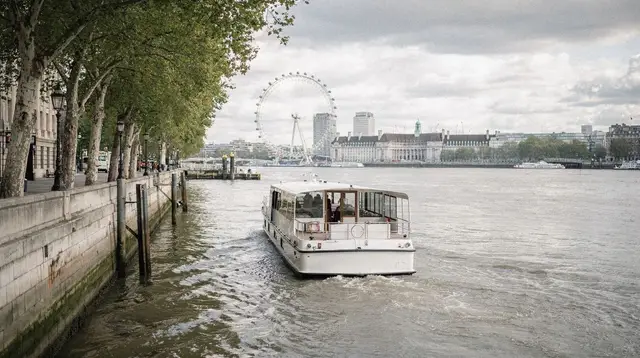
| A quiet pint by the water | South Bank | Riverside terraces, mixed tourist and local crowd, food-focused pubs |
| A historic pub with real age to it | Greenwich or the City | 17th- and 18th-century pubs, riverside views, quieter after office hours end |
| Something upscale and low-key | Kensington-Chelsea | Wine bars and gastropubs rather than clubs, calmer pace |
For the actual venue names, opening times and what to expect on the door, the things to do in nightlife and pubs hub breaks it down by category, and each neighbourhood page above has its own detail. This page is the overview; those are where the specifics live.
If you’ve only got one evening free and can’t do a proper crawl between neighbourhoods, the honest trade-off is this: West End gives you the easiest night logistically — everything within walking distance, transport running until late, food available at all hours — at the cost of feeling more like a tourist circuit than a local one. Shoreditch or Camden feel more like where Londoners actually go, but you’ll spend more of the evening on the Tube or in an Uber getting there and back, and the last-Tube deadline matters more if you’re staying centrally. Neither is wrong; it depends whether you’d rather save the travel time or see the more local side.
Pub crawls and guided nights out
If you’d rather not work out which pub is worth your evening on your own, a guided pub crawl covers several stops with a group and someone who already knows the route. A pub crawl through six pubs in Belgravia is a straightforward way to see a different side of London than the Soho crowds, with company built in if you’re travelling alone.
For pubs with actual history rather than just atmosphere, a guided tour of London’s historic pubs takes in buildings that have been serving drinks for centuries, with the stories that go with them — which pub Dickens drank in, which one survived the Great Fire, that sort of thing. It’s a better fit for an early evening than a late one, since it’s built around the buildings and their history rather than a big night out.
If ghost stories interest you more than architecture, a tour of London’s reputedly haunted pubs covers some of the same historic ground with a different angle, mixing a few drinks with the darker end of the city’s history.
These crawls work best for solo travellers and couples without a group of their own to drink with — the built-in company is the actual product, not just the route. A group of four or more already has that part sorted and might get more out of picking three pubs themselves and walking between them at their own pace, without a fixed schedule to keep to.
None of these are a substitute for just picking a neighbourhood and wandering — they’re worth it if you want structure, company, or a story attached to the evening rather than just a pint.
What a typical evening costs
Prices vary a lot by area and by whether you’re in a chain pub or an independent one. As a rough guide:
| Item | Typical range |
|---|---|
| Pint of beer or lager | £5.50-£7.50 |
| Glass of house wine | £6-£9 |
| Cocktail (Shoreditch or West End bar) | £11-£16 |
| Soft drink | £3-£4.50 |
| Pub food (burger, fish and chips) | £13-£20 |
Central areas — Soho, Covent Garden, the City — sit at the top of these ranges. Prices ease off a little further out in Camden, East London and South Bank, and drop again outside zone 1 entirely. None of this is fixed, and a single pub’s prices can shift between a weekday afternoon and a Saturday night, so treat these as a planning range rather than a quote.
One thing that catches visitors out on the bill: pubs don’t add a service charge the way restaurants sometimes do, but a few venues in very central, tourist-heavy spots quietly run higher menu prices than the same food would cost two streets away, without it being obvious from outside. There’s no service charge to check for at the bar — the higher number on the menu is simply the price.
Getting home afterwards
This is worth planning before the evening starts, not after last orders. The Underground generally stops running between midnight and 1am, earlier on Sundays. The Night Tube runs on a handful of lines — check which ones cover Friday and Saturday nights before relying on it. After the Tube stops, night buses cover the same routes across the city and run all night, and licensed black cabs or ride-hailing apps fill the gap for anywhere the bus network doesn’t reach conveniently. For a fuller comparison of options, see black cab versus Tube versus bus and getting around London by Tube, bus and boat.
Oyster and contactless both work on night buses the same way they do during the day, with the same fare capping, so there’s no separate ticket to think about.
For anyone travelling alone, the difference in feel between the Tube, a night bus and a black cab is worth knowing before you need it: the Tube and Night Tube are well-lit and busy enough to feel normal even late, night buses can feel quieter and less predictable depending on the route and time, and a licensed black cab (recognisable by its rooftop light and licence plate) or a booked ride-hailing car is the most reliable option once it’s past 1am or so. Unlicensed minicabs touting for business outside venues are best avoided regardless of the hour.
A few honest notes
Smoking is banned indoors in every pub and bar in England, including at the bar itself — smokers step outside, and most pubs have some kind of outdoor space for it, even if it’s just the pavement.
“Last entry” times exist separately from closing times at busier bars and clubs — a venue might close at 3am but stop letting new people in at 1am. If you’re planning to move between two or three places in one night, check last entry rather than just closing time.
Dress codes are real at some West End and Mayfair bars — smart-casual minimum, no trainers or sportswear at a handful of venues — but most London pubs have no dress code at all. If in doubt for a specific bar, its own listing will usually say.
A quiet Sunday evening is genuinely quiet: many pubs shift to earlier closing times on Sundays, often 10:30pm or 10pm, in line with traditional Sunday trading hours. If Sunday night is your only free evening, check ahead rather than assuming a normal weekday schedule.
Physical accessibility varies enormously between pubs. Many of London’s oldest and most atmospheric pubs — the ones with the low beams and the centuries of history — were built long before accessibility was a design consideration, and have steps at the entrance, narrow doorways, and toilets down a flight of stairs. Newer pubs and chain venues are generally far more accessible, but if step-free access matters, it’s worth checking a specific pub’s own website or calling ahead rather than assuming.
Nightlife and pubs: frequently asked questions
What time do pubs close in London?
Standard licensing hours run to 11pm on weekdays and Saturdays, with last orders called around 10:45pm. Many pubs, especially in Soho, Shoreditch and Camden, hold extended licences to 1am or later, particularly on Friday and Saturday. Always check the specific pub rather than assuming.
Do you tip in London pubs?
No. Tipping at the bar isn’t part of British pub culture, though it’s common to say “and one for yourself” when buying a round for a group, which the bartender can take as a small tip or add to the bill. There’s no obligation either way.
Is it normal to buy rounds in a London pub?
Yes, buying rounds is the standard way groups drink together in the UK. One person buys for the whole table, and the next round is bought by someone else in turn. It’s a social convention, not a rule, but visitors who don’t know it can look out of step in a group setting.
What’s the legal drinking age in the UK?
- Bars and pubs do ID checks, particularly on anyone who looks under 25, and will refuse service without valid photo ID such as a passport or UK driving licence.
Which part of London has the best nightlife?
It depends what you want. West End and Soho for a lively, central night with theatre and late bars nearby; Shoreditch and East London for cocktail bars and clubs; Camden for live music and an alternative crowd; South Bank and Greenwich for a quieter, riverside pint rather than a big night out.
How do you get home safely after a night out in London?
The Underground stops running shortly after midnight most nights, though the Night Tube runs on some lines on Friday and Saturday. After that, night buses run across the city, and licensed black cabs or ride-hailing apps are the reliable fallback. Plan your route home before you start drinking, not after.
Are London pubs family-friendly during the day?
Many are. Pubs that serve food generally welcome children until early evening, especially in areas like Greenwich, Richmond and South Bank. The atmosphere shifts later in the evening, when most pubs become adults-only in practice even without a formal rule.
Do London pubs accept cash, or is it card only?
Most take both, but card and contactless are now the default and some smaller or busier pubs are card-only with no cash accepted at all. A few venues set a minimum card spend, often £5-£10, so carrying a little cash is still sensible as a backup rather than a requirement.
Is it safe to go to London pubs alone, especially for women?
Yes, in general — solo drinkers of all kinds are a normal sight in London pubs, and pub crawls exist partly to give solo travellers built-in company. Standard city precautions apply: stick to busier, well-known areas late at night, use a licensed black cab or booked ride-hailing car rather than an unlicensed minicab, and plan the route home before you start rather than after.
For the neighbourhood-level detail this page deliberately leaves out — specific pub names, live music venues, and which streets to walk down — start with things to do in London’s nightlife and pubs, or go straight to the area that matches the night you’re after: West End, Camden, East London, South Bank or Greenwich.
Pub crawls and nightlife experiences on GetYourGuide
Verified deep-linked GetYourGuide tours. Book through these links and we earn a small commission at no cost to you.
GetYourGuide does not provide a product photo for this activity — the image shows the meeting point, photographed by us.